 |
Anime Companion Supplement - E
Ea - Ei - En -
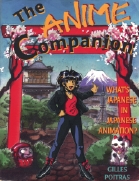
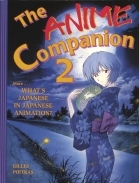
This series of pages is a supplement to two of my books The Anime
Companion and The Anime Companion 2.
For easy browsing go to the: Topical / Subject Index
See the regular entry pages for cross references between variant terms, differing spellings, English to Japanese terms and names:
# - A - B - C - D - E - F - G - H - I - J - K - L - M - N - O - P - Q - R - S - T - U - V - W - Y - Z - Side Bars Special Supplement: Rurouni Kenshin OVAs
- Each Supplement page consists of:
-
1. A list of entries in the books with page numbers.
2. New entries for items not found in the books.
3. Japanese characters for entries
4. Secondary sources used to find information for each entry.
5. Additional information for some entries.
6. Links to select Internet resources related to the entries.
You can also search my entire site:
|
 |
For more information about this supplement see The Anime Companion
Supplement main page. Additions are announced in the Anime Companion Supplement News page and in my Blog.
Hyphenated Japanese terms are listed as single words.
The inclusion of an anime or manga title in these entries is not a recommendation of that title, see my Recommended Anime and Manga page for a list of my recommendations
EAR CLEANING TOOL see: mimikaki (The Anime Companion [vol.1] p.83)
EAR PICK see: mimikaki (The Anime Companion [vol.1] p.83)
EARTH ANCESTOR DEITY see: dōsojin
EARTH SPIDER see: tsuchigumo (earth spider)
EARTHQUAKE OF 1855 see: Ansei Edo Jishin (Ansei Edo Earthquake)
EARTHQUAKE OF 1923 see: Kantō Daisinsai (The Anime Companion 2 p.41)
EARTHQUAKE, ANSEI EARTHQUAKE see: Ansei Edo Jishin (Ansei Edo Earthquake)
EARTHQUAKES see: jishin (The Anime Companion [vol.1] p.54)
EAST-SEA HIGHWAY see: Tōkaidō (The Anime Companion 2 p.101
- ebisu 恵比須 OLD FORM 惠比須, or 恵比寿 OLD FORM 惠比壽, or 夷 or 戎 or 蛭子(The Anime Companion [vol.1] p.25)
- Sources:
Japan: An Illustrated Encyclopedia p.304
EBISU (PEOPLE) see: Emishi (The Anime Companion 2 p.19)
ECCHI see: hentai (The Anime Companion 2 p.27)
ECONOMIC PLANNING AGENCY see: Keizai Kikaku Chō (The Anime Companion [vol.1] p.66)
- edamame えだまめ or 枝豆 (The Anime Companion 2 p.17)
- Sources:
Stores in the SF Bay Area
Condon, Jack and Camy Condon. The Simple Pleasures of Japan p.86
Nagasawa Kimiko & Camy Condon. Eating Cheap in Japan 46, 47, 113 (item)
Eating in Japan p.102
Hosking, Richard. A Dictionary of Japanese Food p.39
- Edo 江戸 OLD FORM 江戶 (The Anime Companion 2 p.18)
- Sources:
Japan: An Illustrated Encyclopedia p.315
De Mente, Boye Lafayette. Japan Encyclopedia p.490
Web Sites:
Edo Japan, A Virtual Tour
EDO See also Tokyo (The Anime Companion 2 p.104)
EDO BAY see: Tōkyō Wan (The Anime Companion 2 p.105)
EDO CASTLE see: Edojō (The Anime Companion 2 p.18)
EDO CITY COMMISSIONER see: Edo machi bugyō (Edo city commissioner or magistrate)
EDO CITY MAGISTRATE see: Edo machi bugyō (Edo city commissioner or magistrate)
- Edo machi bugyō (Edo city commissioner or magistrate) 江戸町奉行
-
The machi bugyō specifically organized for the city of Edo (The Anime Companion 2 p.18), the first to hold the title was Amano Saburobei Yasukage. This was a position established during the Edo Period (The Anime Companion [vol.1] p.25) to maintain peace and order in the shogun's capital. Starting in 1658 they also took command of firefighting. Often it as referred to as just machi bugyō. They were termed the Northern (kita) and Southern (minami) machi bugyō, the terms were originally geographical but in time each performed the same duties for the entire city. The position was filled by two hatamoto (The Anime Companion 2 p.27) who performed their duties on alternating months. Having two equal officers in the post helped safeguard against intrigue. They handled a variety of tasks regarding commoners (chōnin) and rōnin (The Anime Companion [vol.1] p.106), others dealt with samurai (The Anime Companion [vol.1] p.110). Their tasks included building regulations, civil administration, police, fire fighters, city prisons, public relief, and religious organizations. The machi bugyō on duty would be assisted by an administrative staff and about 120 yoriki and dōshin. The Edo machi bugyō regularly reported to the rōjū and would attend the hyōjōsho (supreme court).
Anime and Manga:
In Ghost Slayers Ayashi both the North Magistrate (v.1. p.128 & ep.1) and South Magistrate (v.1 p.7, 128 & ep.2) are mentioned.
Manga:
The Yamada Asaemon performs o-tameshi with the machi bugyō as a witness in Samurai Executioner (v.1 p.13, 30-) and in Lone Wolf and Cub (v.5 p.164).
Sources:
Cunningham, Don. Taiho-Jutsu p.13, 24, 42
Cybriwsky, Roman. Historical Dictionary of Tokyo p.89
Deal, William E. Handbook to Life in Medieval and Early Modern Japan p.97, 98
Goedertier, Joseph M. A Dictionary of Japanese History p.44
Japan: An Illustrated Encyclopedia p.317
Naito Akira. Edo: The City That Became Tokyo p.26
Totman, Conrad. Politics in the Tokugawa Bakufu 1600-1843 p.198, 304n40
Turnbull, Stephen. Samurai Warlords p.86
Waley, Paul. Tokyo: City of Stories p.39-40
- Edo Period [Edo Jidai 江戸時代 OLD FORM 江戶時代] (The Anime Companion [vol.1] p.25)
- Sources:
Japan: An Illustrated Encyclopedia p.317
EDO RIVER see: Edogawa
- Edo Yagyū 江戸柳生
-
When Yagyū Munenori became the sword teacher for the Tokugawa family (The Anime Companion [vol.1] p.137) he moved to Edo (The Anime Companion 2 p.18). He then became the head of the branch of the Yagyūshi (Yagyū family) in the Shōgun's (The Anime Companion [vol.1] p.123) capital while his father and later his nephew, Yagyū Hyōgonosuke Toshiyoshi, headed the Owari Yagyū at the family's home in Yagyū village.
Manga:
The Edo Yagyū are mentioned in Samurai Legend (p.11) and in Lone Wolf and Cub.
Sources:
Turnbull, Stephen. The Samurai Sourcebook p.90-91
- Edogawa 江戸川
-
One of the major rivers of Tōkyō (The Anime Companion 2 p.104). At one time the Edogawa was simply the lower course of the Tonegawa. However the Tonegawa was split into two flows in 1654 and the Edogawa is now the western split of the river flow. The upper Edogawa provides the border between Saitama-ken and Chiba-ken (The Anime Companion [vol.1] p.18), then the lower Edogawa flows between Chiba-ken and two wards of Tōkyō, Katsushika-ku and Edogawa-ku (The Anime Companion 2 p.18). Towards the end of its flow the river splits with the eastern flow continuing into Chiba-ken, while the western flow continues along the border with Tōkyō with the name Kyu-Edogawa. Today the river still has a traditional hand powered ferry boat that goes from Shibamata in Katsushika-ku to the opposite bank in Chiba-ken.
Anime:
The Tonegawa, Edogawa, Arakawa and Okawa (aka: Sumidagawa, The Anime Companion 2 p.93) are all mentioned in a discussion at the banks of the Tonegawa in Ghost Slayers Ayashi (ep.11).
Manga:
In Samurai Executioner (v.10 p.27) a boat goes from the Onagi river branch of the Okawa to the Shinkawa river to the Edo river.
Sources:
Bilingual Atlas of Tokyo 74 B1-B4, 80, 86, 92, 98.
Cybriwsky, Roman. Historical Dictionary of Tokyo p.48
Japan: An Illustrated Encyclopedia p.316
Waley, Paul. Tokyo Now & Then p.278-279
- Edogawa Rampo 江戸川乱歩 OLD FORM 江戶川亂歩 (The Anime Companion 2 p.18)
- Sources:
Edogawa Rampo. Japanese Tales of Mystery and Imagination, preface by James B. Harris.
Japan: An Illustrated Encyclopedia p.316
NOTE: In January of 2006 a second volume by Edogawa Rampo was translated into English, The Black Lizard and Beast in the Shadows
EDOGAWA WARD see: Edogawa Ku (The Anime Companion 2 p.18)
- Edogawa-ku 江戸川区 OLD FORM 江戶川區 (The Anime Companion 2 p.18)
- Sources:
Japan: An Illustrated Encyclopedia p.316
Tokyo Metropolitan Atlas p.48-49
Web Sites:
Edogawa (official site)
- Edojō (edo castle) 江戸城 OLD FORM 江戶城 (The Anime Companion 2 p.18)
- Sources:
Japan: An Illustrated Encyclopedia p.315
Cybriwsky, Roman. Historical Dictionary of Tokyo p. 46
Waley, Paul. Tokyo Now & Then p. 4
EDOMAEZUSHI see: nigirizushi
EDUCATION MAMA see: kyōiku mama (education mama)
EEL, CHARCOAL BROILED see: kabayaki (charcoal broiled fish)
EELS see: unagi (The Anime Companion [vol.1] p.144)
EGG SHELL FILLED WITH BLINDING POWDER see: metsubushi (sight remover)
EGGPLANT see: nasu (The Anime Companion [vol.1] p.91)
EGG TŌFU see: tamago dōfu (egg tōfu)
EGGS see: tamago (The Anime Companion 2 p.97)
EGG YOKE IN SAKE see: tamago-zake (The Anime Companion 2 p.97)
EIGHT BANNERS DEITY see: Hachiman (The Anime Companion 2 p.25)
EIGHT-HUNDRED TEN-THOUSAND-MANY KAMI see: Yao-yorozu-no-kami (eight million gods)
EIGHT MILLION GODS see: Yao-yorozu-no-kami (eight million gods)
- eiyō drinks (nutritional supplement drinks) 栄養ドリンク (The Anime Companion [vol.1] p.26)
- Sources:
Palter, D. C. "Tonic Eiyo Drinks." Mangajin: Japanese Pop Culture & Language Learning No 21 October 1992 pp.12-17
Carroll, John. Trails of Two Cities p.47
EJACULATION FROM TIT JOB see: tanima no shirayuri (white lily of the valley)
EJACULATION IN MOUTH see: kōnai hassha (ejaculation in mouth)
EKADASHAMUKHA BODHISATTVA see: Jūichimen Kannon Bosatsu (Eleven Faced Kannon)
- ekiben (station lunch) 駅弁 OLD FORM 驛辨 (The Anime Companion [vol.1] p.26)
- Outlook on Japan p.152
Japan: An Illustrated Encyclopedia p.329
Discover Japan v.2 p.58
Eating in Japan p.120
A Look Into Japan p.168
Vardaman, James M. and Michiko Sakaki Vardaman Japanese Etiquette Today p.56
Japanese Inn & Travel p.141-8
Living Japanese Style p.117
Vardaman, James M. and Michiko Sakaki Vardaman Japan From A to Z p.20
- ekisha (fortune tellers) 易者
-
Fortune tellers. Until modern times the term ekisha was used for those professional fortune tellers who used the Chinese classic work the I-Ching (Yi-Jing) in their divination. Two visual clues to look for in scenes with fortune tellers are sangi (yin-yang divination block) (The Anime Companion [vol.1] p.111) and zeichiku (The Anime Companion 2 p.121), both of which are used in I-Ching divination. In modern times the term has come to include those who do the Chinese forms of palm reading (tesō) as well as face and body reading (ninsō). Some practitioners will work on the street setting up a table on the sidewalk, often near train stations at night.
Anime:
In Pom Poko Oroku becomes a fortune teller and in Otogi Zoshi (ep.15) we find that Urabe has become a ekisha.
In Doomed Megalopolis (ep.2) we see a fortune teller on street at night
Manga:
In chapter 6 of Club 9 Haruo has a fortune teller read her palm and tell her about herself, he gets everything wrong.
In Samurai Executioner (v.6 p.143-4) a young Yamada Asaemon turns to a fortune teller for an answer to a question he has.
Sources:
Illustrated Living Japanese Style p.107
Japan: An Illustrated Encyclopedia p.329
- ELDER see:
-
karō (house elder)
rōjū (elder)
toshiyori (elders, community leaders)
ELECTRIC RICE COOKER see: denki-gama (The Anime Companion [vol.1] p.22)
ELECTRIC TOWN see: Akihabara (The Anime Companion [vol.1] p.5)
ELEVEN FACED AVALOKITESHVARA see: Jūichimen Kannon Bosatsu (Eleven Faced Kannon)
ELEVEN-HEADED KANNON see: Jūichimen Kannon Bosatsu (Eleven Faced Kannon)
- ema (votive tablet) 絵馬 OLD FORM 繪馬 (The Anime Companion [vol.1] p.26)
- Sources:
Japan: An Illustrated Encyclopedia p.332
Outlook on Japan p.125
- Emily (aircraft) 二式飛行艇 (Nishikihikōtei) (The Anime Companion 2 p.19)
- Sources:
Mikesh, Robert C. Japanese Aircraft p.51
- Emishi 蝦夷 (The Anime Companion 2 p.19)
- Sources:
Cambridge History of Japan v.1 p.79, 205, 246
Japan: An Illustrated Encyclopedia p.354, 1406
EMISSARIES OF TENSHŌ see: Tenshō Ken'ō Shisetsu (The Anime Companion [vol.1] p.135)
- en (yen) 円 OLD FORM 圓 (The Anime Companion 2 p.20)
- Sources:
Chamberlain, Basil Hall. Japanese Things p.109
Japan: An Illustrated Encyclopedia p.1745
Outlook On Japan p. 54
Vardaman, James M. and Michiko Sakaki Vardaman Japan From A to Z p. 28, 127
Web Sites:
Bank of Japan Exchange Rate information.
EN NO OZUNU see: En no Gyōja (The Anime Companion [vol.1] p.28)
- enchō (extended service) 延長
-
Enchō simply means length. In the fūzoku (sex industry) it also refers to extending the length of of time to enjoy a service for an extra fee, or extending the customer's choces to other types of service for additional money.
Anime:
In episode 11 of Samurai Champloo Jin asks for an "extension" in the brothel to stall for time.
Sources:
Clements, Steven Langhorne. Tokyo Pink Guide p.59
De Mente, Boye Lafayette. Sex and the Japanese p.128
Sinclair, Joan. Pink Box p.186
ENCOURAGING STICK see: keisaku or kyōsaku (Zen stick) (The Anime Companion 2 p.44)
THE END OF THE MONEY IS THE END OF THE RELATIONSHIP see: kane no kireme ga en no kireme
END TILE WITH DEMON FACE see: onigawa (The Anime Companion 2 p.69)
ENERGY DRINK see: eiyō drinks (nutritional supplement drinks) (The Anime Companion [vol.1] p.26)
ENGAGEMENT GIFTS see: yuinō (The Anime Companion [vol.1] p.149)
- engawa (veranda) 縁側 (The Anime Companion [vol.1] p.27)
- Sources:
Discover Japan v.1 p.76
- Engi Era 延喜 (The Anime Companion 2 p.20)
-
Sources:
Japan: An Illustrated Encyclopedia p.342
- enjo kōsai (compensated dating) 援助交際
-
Compensated dating. Young women, usually high school girls, agreeing to date older men in exchange for cash or gifts. This is not the same as prostitution as it does not necessarily involve sex. Laws have been passed to reduce this practice including one requiring parental permission for women under 18 to walk around with older men. Terekura (telephone club) and Internet web sites have been used to set up such dates.
Anime and Manga:
Given that GTO involves troubled teens and a teacher who is trouble it is no surprise that enjo kōsai comes up in the series (ep. 15, 24 & 43; v. 16 ch.125).
Manga:
In IWGP: Ikebukuro West Gate Park (v.1 p.92) girls who are the victims of a serial rapist are rumored to have been taking part in compensated dating. One of girls only went out to eat and for karaoke (The Anime Companion [vol.1] p.62) and was planning to quit.
In Voyeurs, Inc. (v.1 p.85) two characters talk about an incident that happened during a "paid date" set up through a teleclub.
Sources:
McLelland, Mark J. Male Homosexuality in Modern Japan p.62
Schreiber, Mark editor. Tokyo Confidential p.81
Sinclair, Joan. Pink Box p.186
- enka (popular song style) 演歌 (The Anime Companion [vol.1] p.27)
- Sources:
Japan: An Illustrated Encyclopedia p.1284
- enkai (party) 宴会 OLD FORM 宴會 (The Anime Companion [vol.1] p.27)
- Sources:
Japanese Inn & Travel p.72
Japan: An Illustrated Encyclopedia p.343
ENKIRIDERA see: kakekomidera (refuge temple)
- ennichi (feast days) 縁日 (The Anime Companion [vol.1] p.28)
- Sources:
Outlook on Japan p.128
Japan: An Illustrated Encyclopedia p.344
- En no Gyōja 役行者 (The Anime Companion [vol.1] p.28)
- Sources:
Japan: An Illustrated Encyclopedia pp.345, 1423
ENNO-OZUNO see: En no Gyōja (The Anime Companion [vol.1] p.28)
ENOKEN see: Enomoto Ken'ichi (The Anime Companion [vol.1] p.28)
- Enomoto Ken'ichi 榎本健一 (The Anime Companion [vol.1] p.28)
- Sources:
Japan: An Illustrated Encyclopedia p.345
- Enoshima 江の島 (The Anime Companion [vol.1] p.28)
- Sources:
Japan: An Illustrated Encyclopedia p.345
ENOSHIMA SODACHI NEOI NO CHIGOKIKU see: Aoto-zōshi hana no nishiki
ENTRY WAY WHERE YOU REMOVE YOUR SHOES see Genkan (The Anime Companion [vol.1] p.34)
EPA see: Keizai Kikaku Chō (Economic Planning Agency) (The Anime Companion [vol.1] p.66)
EQUINOX BEAN CAKE see also: ohagi (The Anime Companion 2 p.66)
EROGURO see: erogro nansensu (erotic-grotesque nonsense)
- eroguro nansensu (erotic-grotesque nonsense) エログロナンセンス
-
A shortened version of the phrase erotic-grotesque nonsense, sometimes shortened even further to just eroguro. The term came into use in Japan in the 1920s and 1930s when it was used by the mass media to describe the times. This was during the late Taishō jidai (The Anime Companion 2 p.95) in the 1920s but especially in the very early Shōwa jidai (The Anime Companion 2 p.88) during the depression of the early 1930s when Euro-American entertainment quickly increased in urban Japan, especially Ōsaka and Tokyo. Some of the forms it took were jazz, the proliferation of bars, dance clubs, review theaters, chorus girls, comedians like Enomoto Ken'ichi (The Anime Companion [vol.1] p.28), coffee shops (kissaten; The Anime Companion [vol.1] p.70), movies, and other modern and fast paced entertainment. The conservative forces of the time denounced the eroguro nansensu phenomenon as decadent.
Manga:
Tezuka remarks in Adolf (v.1 p.117) that by the mid 1930s during the expansion of militarism "ero-guro-nonsense" still was in the imaginations of the average citizen.
Sources:
Kurosawa Akira. Something Like an Autobiography 71
Richie, Donald, Tokyo p.120
Seidensticker, Edward, Tokyo Rising p.59-60, 82
Silverberg, Miriam, Erotic Grotesque Nonsense p.xv-xvi, 28-30, 183
- eromanga (erotic manga) エロ漫画
-
Erotic manga (The Anime Companion [vol.1] p.80), sometimes called porunomanga. These are sexually explicit manga mainly made for men. In the English speaking world the term hentai-manga has come into use. However this use of the word hentai (The Anime Companion 2 p.27) is not the way the Japanese use it.
Manga:
Many such manga have been translated into English, some of the most noted authors include Yui Toshiki (Hot Tales, Misty Girl Extreme, Wingding Orgy), Ogami Wolf (Super Taboo), Kondom (Bondage Fairies), and Utatane Hiroyuki (Countown Sex Bombs, Temptation),
Sources:
Lehmann, Timothy R. Manga: Masters of the Art p.246
Shigematsu Setsu "Dimensions of Desire: Sex, Fantasy, and Fetish in Japanese Comics" in Themes & Issues in Asian Cartooning p. 131
EROTIC ART see: shunga (The Anime Companion 2 p.89)
EROTIC GROTESQUE NONSENSE see: eroguro nansensu (erotic-grotesque nonsense)
EROTIC MANGA see: eromanga
ESOTERIC BUDDHISM see: mikkyō (The Anime Companion 2 p.56)
ESOTERIC TEACHING, BUDDHIST see: mikkyō (The Anime Companion 2 p.56)
ETCHI see: hentai (The Anime Companion 2 p.27)
ETERNAL LAND See: Tokoyo no Kuni (Eternal Land)
- Etorofu 択捉
-
The largest, 3,139 sq km (1,212 sq mi), of the disputed islands of the Northern Territories (see Hoppō Ryōdo modai). Etorofu is a volcanic island located North East of the main island of Hokkaidō (The Anime Companion [vol.1] p.46) just beyond Kunashirito Island. To the North of Etorofu is the Sea of Okhotsk and South is the Pacific Ocean. Hitokappu Bay on the island is where the Japanese fleet began it's mission to attack Pearl Harbor.
Anime and Manga:
In both the Ghost in the Shell manga ("07 Phantom Fund", 2nd ed p.151-) and the Ghost in the Shell S.A.C. 2nd GIG (ep.6) TV series the Major travels to Etorofu.
Anime:
The Etorofu smuggling route is mentioned Ghost in the Shell: Stand Alone Complex episode 18. Etorofu itself is mentioned later in episode 19.
Sources:
Japan: An Illustrated Encyclopedia p.351
Road Atlas Japan 230
EULALIA see: susuki (pampas grass) (The Anime Companion 2 p.94)
EVIL CRUSHING ARROW see: Hamaya (The Anime Companion [vol.1] p.39)
EXAMINATION HELL see: Shiken Jigoku (The Anime Companion [vol.1] p.118)
EXCOMMUNICATION see: hamon hamon (formal expulsion)
EXERCISE IN PARK see: rajio taisō (The Anime Companion 2 p.72)
EXORCISM see: Tsukimono otoshi (The Anime Companion [vol.1] p.140)
EXPO '70 see: Nippon bankoku hakuran-kai (Japan World Exposition aka Expo '70)
EXPRESSWAY BAYSHORE LINE see: shuto kōsoku wangan sen (The Anime Companion 2 p.90)
EXPRESSWAYS see: kōsoku dōro (The Anime Companion 2 p.50)
EXPULSION see: hamon (formal expulsion)
EXTENDED SERVICE see: enchō (extended service)
EXTRUDER FOR TOKOROTEN see: tokoroten-tsuki (extruder for tokoroten)
EYEBROWS SHAVEN see: okimayu
EZO (PEOPLE) see: Emishi (The Anime Companion 2 p.19)
EZOHITSUJIGUSA see: suiren (water lily)
For easy browsing go to the: Topical / Subject Index
# - A - B - C - D - E - F - G - H - I - J - K - L - M - N - O - P - Q - R - S - T - U - V - W - Y - Z - Side Bars
Special Supplement: Rurouni Kenshin OVAs
You can also search my entire site: