 | Anime Companion
Supplement - S
Sa - Sam - Sap - Sc
- Se - Sen - Sha - Shi - Shin - Sho - Shu - Si - Sn - So - St - Su - Sun
This series of pages is a supplement to two of my books The Anime
Companion and The Anime Companion 2.
For easy browsing go to the: Topical / Subject Index
See the regular entry pages for cross references between variant terms, differing spellings, English to Japanese terms and names:
# - A - B - C - D - E - F - G - H - I - J - K - L - M - N - O - P - Q - R - S - T - U - V - W - Y - Z - Side Bars Special Supplement: Rurouni Kenshin OVAs
- Each Supplement page consists of:
-
1. A list of entries in the books with page numbers.
2. New entries for items not found in the books.
3. Japanese characters for entries
4. Secondary sources used to find information for each entry.
5. Additional information for some entries.
6. Links to select Internet resources related to the entries.
You can also search my entire site:
|
 |
For more information about this supplement see The Anime Companion Supplement main page. Additions are announced in the Anime Companion Supplement News page and in my Blog.
Hyphenated Japanese terms are listed as single words.
The inclusion of an anime or manga title in these entries is not a
recommendation of that title, see my Recommended
Anime and Manga page for a list of my recommendations
SACRED CORDS/ROPE see: shimenawa (The Anime Companion [vol.1] p.118)
SACRED TREE see:
shinboku (The Anime Companion [vol.1] p.119)
sakaki 榊
SADDHARMA-PUNDARĪKE-SŪTRA see: Myōhōrengekyō (Lotus Sūtra)
SADŌ see: cha-no-yu (The Anime Companion [vol.1] p.17)
- Sado 佐渡
-
Also called Sadogashima. Sado is the largest island to be found in the Sea of Japan (see: Nihonkai, The Anime Companion 2 p.63), the 5th largest Japanese island and has a population of less than 100,000. Originally Sado was a separate province until 1876, presently it is part of Niigata ken. During the 12th through 16th centuries the island was a place of exile. Among those exiled to the island were Emperor Jintoku and Zeami the founder of nō (The Anime Companion 2 p.63). In the very early Edo Period (The Anime Companion [vol.1] p.25) gold and silver mines began operation and they still continue to have some production. Today tourism, seafood and agriculture are the main industries.
Anime:
The story in Raven Tengu Kabuto involves the gold of Sado island.
In Pom Poko a plan is developed to invite tanuki (The Anime Companion [vol.1] p.133) from Sado to teach shape shifting to the tanuki of the Tama Area (see: Tama Chiku (The Anime Companion 2 p.97).
Sources:
De Mente, Boye Lafayette. Japan Encyclopedia p. 431
Japan: An Illustrated Encyclopedia p.1290
Web Site:
Sado Tourism Association
SADOGASHIMA see: Sado
SAE NO KAMI see: dōsojin
SAHASRABHUJA BODHISATTVA see: Senju Kannon (Thousand-Armed Kannon)
SAI see: jitte (The Anime Companion [vol.1] p.55)
- saifuku 祭服 (The Anime Companion [vol.1] p.107)
- Sources:
Basic Terms of Shintō (1958) p.49
Bocking, Brian. A Popular Dictionary of Shintō p.146
- Saigō Takamori 西郷隆盛 (The Anime Companion [vol.1] p.107)
- Sources:
A Look Into Tokyo p.41
Japan: An Illustrated Encyclopedia p.1293
- Saigyō 西行 (The Anime Companion [vol.1] p.107)
- Sources:
Japan: An Illustrated Encyclopedia p.1293
Schodt, Frederik. Inside the Robot Kingdom p.59
- Saikaku 西鶴
-
1642-93 Also known as Ihara Saikaku and Ihara Kakuei, his original name is
believed to have been Hirayama Tōgo. He was born into a merchant family in
Ōsaka (The Anime Companion [vol.1] p.102). Starting in his teens
he wrote haikai poems quickly becoming a teacher, editor and critic of the
style. In 1675 his wife died and he turned the family business over to a clerk and devoted his life full time to literature, traveling and visiting the
pleasure quarters. His first work of prose fiction, which had his own
illustrations, Kōshoku Ichidai Otoko, The Life of an Amorous Man, was a great success and he became a full time author. He pioneered a new genre of literature known as ukiyo-zōshi, books of the floating world.
Some of his works translated into English include: Life of an Amorous
Man, Five Women Who Loved Love, Life of an Amorous Woman, Great Mirror of Male Love, This Scheming World, Tales of Samurai Honor, Tales of Japanese Justice, and Some Final Words of Advice.
Anime:
In Samurai Champloo (ep.6 ) it is said that reading The Great Mirror of Male Love by Ihara Saikaku led Izaak Titsingh to come to Japan.
Sources:
Japan: An Illustrated Encyclopedia p.1294
Illustrated Who’s Who of Japan p.118
- saikoro [or sai] (dice) 骰子 (The Anime Companion [vol.1] p.108)
- Sources:
Vardaman, James M. and Michiko Sakaki Vardaman Japan From A to Z p.35
- sailor fuku (sailor suit) セーラー服 (The Anime Companion [vol.1] p.108)
- Sources:
Today's Japan p.73
Vardaman, James M. and Michiko Sakaki Vardaman Japan From A to Z p.118
SAILOR FUKU SHOP see: buruseara shopu
(bloomer-sailor shop)
SAILOR SUIT see: sailor fuku (The Anime Companion [vol.1] p.108)
- saisen (money offering) 賽銭 (The Anime Companion [vol.1] p.109)
- Sources:
Basic Terms of Shintō (1958) p.50
A Look Into Japan p.22
Vardaman, James M. and Michiko Sakaki Vardaman Japan From A to Z p.97
Bocking, Brian. A Popular Dictionary of Shintō p.149
- Saitō Hajime 斎藤一
- 1844 - 1915 Born in Edo (The Anime Companion 2 p.18) his father was a retainer of Akashi Han and grew up in the shōgun's capital. He was proficient in kenjutsu (The Anime Companion 2 p.45). After he killed another samurai (The Anime Companion [vol.1] p.110) he fled to Kyōto (The Anime Companion [vol.1] p.77) where is ended up joining the his friends in the Shinsengumi (The Anime Companion 2 p.86). He was one of the youngest members of the group as well as one of the tallest at 5 foot 11 inches. Saitō was given the rank of captain and placed in charge of the Third Squad. He took part in the Ikedaya Jiken (The Anime Companion 2 p.30), the Toba-Fushimi no Tatakai (The Anime Companion 2 p.100), and fought during the battle in Aizu han (The Anime Companion 2 p.4). He eventually returned to Edo, now renamed Tōkyō (The Anime Companion 2 p.104) where he married the daughter of a retainer of the now exiled lord of Aizu han (The Anime Companion 2 p.4). He also changed his name to Fujita Gorō. In 1872 he joined the police. In 1915 he died at the age of 71. He had lived during the last days of the Edo Period (The Anime Companion [vol.1] p.25), through the Meiji Period (The Anime Companion [vol.1] p.81) and into the early Taishō period (The Anime Companion 2 p.95)
Anime and Manga:
Saitō plays a significant role in the Rurouni Kenshin series, notably during the Kyōto arch of the manga and TV series and in the Samurai X Trust and Betrayal OVA series.
He is also portrayed
in an interesting manner in Peacemaker and Peacemaker Kurogane.
Sources:
Hillsborough, Romulus. Shinsengumi: The Shōgun's Last Samurai Corps p.30, 184-5, 194
- Saiyūki (The Journey To The West) 西遊記 (The Anime Companion 2 p.75)
- Sources:
Toriyama Akira. Dragon Ball v. 4 Letters
Princeton Companion to Classical Japanese
Literature p.392
Clements, Jonathan & Helen McCarthy. The Anime
Encyclopedia p.192-193
- sakaki 榊
-
Evergreen plants used in Shintō (The Anime Companion [vol.1] p.121) rituals and as offerings in Shintō and Buddhism (see: Bukkyō, The Anime Companion [vol.1] p.15). The term usually applies to cleyera ochnacea or cleyera theacea (japonica), a shrub that grows between 6 - 10 meters tall. The 6 - 10 cm long oblong leaves are too large for this plant to be used in bonsai (The Anime Companion [vol.1] p.13). A ritually decorated sakaki is mentioned in the Nihon Shoki (Chronicle of Japan) 日本書紀 and Kojiki (Record of Ancient Matters). At times the term may be applied to certain pines or to cryptomeria (see: sugi, The Anime Companion 2 p.92). At shrines one often sees mikuji (The Anime Companion [vol.1] p.83) fortunes tied to sakaki which are often planted on the grounds. The wood is used for making a variety of small items.
Anime:
In Kami Chu episode 1 we see two vases with sakaki cuttings in them during the ritual at the shrine.
In Princess Mononoke the small branch that San cuts off and places above the wounded Ashitaka's head is a sakaki
Sources:
Bocking, Brian. A Popular Dictionary of Shinto p.149-150
Joya, Mock. Mock Joya's Things Japanese p.625
Levy-Yamamori, Ran & Gerard Taaffe. Garden Plants of Japan p.18, 81-82
Princess Mononoke: The Art and Making of Japan's Most Popular Film of All Time p.103
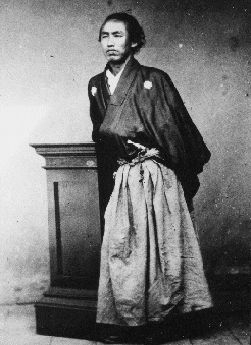
- Sakamoto Ryōma 坂本竜馬 FORMAL
坂本龍馬 (The Anime Companion 2 p.76)
- Sources:
Japan: An Illustrated Encyclopedia p.1299
Jansen, Marius B. Sakamoto Ryōma and the Meiji Restoration
- Sakata 酒田 (The Anime Companion 2 p.76)
- Sources:
Japan: An Illustrated Encyclopedia p.1300
- sakaya (sake brewer and dealer) 酒屋
-
A brewer or dealer in sake (The Anime Companion [vol.1] p.109). At one time the brewing of sake was restricted to temples (see: jiin; The Anime Companion [vol.1] p.53) and monasteries. It was during the Kamakura Period (The Anime Companion [vol.1] p.59) that the making of sake became a separate business operation. During the Muromachi Period (The Anime Companion [vol.1] p.90) sake brewers also became moneylenders, at very high rates of interest. Starting around 1400 sakaya, in exchange for official protection and monopoly rights, began paying the shōgunate (see: bakufu; The Anime Companion 2 p.8) an annual tax, which became an important source of government revenue. Sake shops traditionally also sold, and often still do, shōyu (The Anime Companion [vol.1] p.124), mirin, salt and miso (The Anime Companion [vol.1] p.84), today they will also sell other alcoholic beverages. A traditional sign for a sake brewer or dealer is a large ball made of cedar (see: sugi; The Anime Companion 2 p.92) boughs called a sugidama or a sakebayashi, this ball is a visual clue to look for in anime and manga.
Anime:
A cedar ball is seen over a shop front in the background during opening of the eating contest in episode 6 of Samurai Champloo.
In episode 5 of the Patlabor OVA Original Series we find out that Noa's family runs a liquor store in Tomakomai (The Anime Companion 2 p.105) in Hokkaidō (The Anime Companion [vol.1] p.46).
Manga:
Hashiba Tatsunosuke is the brewer of the shōgun's (The Anime Companion [vol.1] p.123) sake in Samurai Executioner (v.2 p.121, 134-140).
In Satsuma Gishiden (v.1 p.53) we read how Satsuma han (The Anime Companion 2 p.80), to reduce poverty among samurai (The Anime Companion [vol.1] p.110), decreed that several occupations, including sake dealer, would be limited to samurai.
Sources:
Ashburne, John & Abe Yoshi. World Food Japan p.164
Goedertier, Joseph M. A Dictionary of Japanese History p.238
Japan: An Illustrated Encyclopedia p.1300, 1302
Web Site:
The first sakaya in the US is True Sake in San Francisco and they have a sakebayashi hanging outside of their store.
- sakazuki (sake cup) さかずき or 杯 or 盃 (The Anime Companion [vol.1] p.109)
- Sources:
Eating in Japan p.141
- sake 酒 (The Anime Companion [vol.1] p.109)
- Sources:
Japan: An Illustrated Encyclopedia p.1300
Visits to local stores and the Takara sake brewery in Berkeley, CA
"SAKE," COOKING see: mirin
SAKE BREWER AND DEALER see: sakaya (sake brewer and dealer)
SAKE BREWMASTER see: tōji (sake master brewer)
- SAKE CUPS see:
- choko (The Anime Companion [vol.1] p.19)
masu (The Anime Companion [vol.1] p.80)
sakazuki (The Anime Companion [vol.1] p.109)
SAKE FLASKS see: tokkuri (The Anime Companion [vol.1] p.137)
SAKE MASTER BREWER see: tōji (sake master brewer)
SAKE MERCHANTS see: sakaya (sake brewer and dealer)
SAKE, SPICED see: toso (The Anime Companion [vol.1] p.139)
SAKE WITH AN EGG YOKE IN IT see: tamago-zake (The Anime Companion 2 p.97)
SAKEBAYASHI see: sakaya (sake brewer and dealer)
- sakimori (border guard) 防人
-
A system of conscripted border guards sent to Kyūshū (The Anime Companion [vol.1] p.78) to protect Japan from possible invasion. The term originally meant "guards of a cape" and was written with different kanji (崎守). The earliest recorded use of the term is in the imperial edict in 646 ordering the Taika Reform. The Nihon Shoki records sakimori being sent to Kyushu after the fall of Kaya in Korea which took place in the mid-6th century. Originally the conscripts came from all of Japan, after 730 only ones from the Eastern part of Honshu (The Anime Companion [vol.1] p.47) were sent. The administration of of the sakimori was handled by the Sakimori no Tsukasa in Dazaifu. The garrisons were recorded as being in Iki, Tsushima and Tsukushi province. The sakimori were assigned for a three year period, not counting their traveling time. During their tour of duty they had to grow their own food as well as perform their military duties. Conscription continued into the 10th century even though the system was abolished in 795. A body of sad poems written by these soldiers and their family members has survived and are referred to as sakimori uta, many such poems are found in the Man'yōshū (The Anime Companion [vol.1] p.80). Earlier guards with a similar role existed and were called ezomori and shimamori.
Anime:
A border guard's (sakimori) spirit is seen by Abe no Masahiro at night walking the streets of Heiankyō in Shonen Onmyouji (ep 16).
Sources:
Friday, Karl F. Hired Swords p.20-24
Goedertier, Joseph M. A Dictionary of Japanese History p.238
Japan: An Illustrated Encyclopedia p.1301
SĀKURU see: circle ("sākuru")
SATOKOTOBA see: kuruwa kotoba
- sakura (cherry blossom) 桜 (The Anime Companion
[vol.1] p.110)
- Sources:
Japan: An Illustrated Encyclopedia p.180
- sakura mochi 桜餅 OLD FORM 櫻餠 (The Anime Companion 2 p.76)
- Sources:
Hosking, Richard. A Dictionary of Japanese Food p.123
Eating in Japan p.131
Ashburne, John & Abe Yoshi. World Food Japan p. 29
SAKURA VIEWING see: hanami (The Anime Companion [vol.1] p.39)
SALAD see: aemono
SALARIED MAN see: sararīman (The Anime Companion [vol.1] p.111)
SAMISEN see: shamisen (The Anime Companion [vol.1] p.116)
- samurai 侍 (The Anime Companion [vol.1] p.110)
- Sources:
Japan: An Illustrated Encyclopedia p.1306
SAMURAI see also: bushi (The Anime Companion 2 p.11)
SAMURAI OFFICER see: yoriki (assistant magistrate)
SAMURAI RANK, LOWER-GRADE see: dōshin (lower-grade samurai rank)
- San Oku En Jiken (300 million yen robbery) 三億円事件
-
One of the most famous robberies in Japanese history, the amount stolen was 294,307,500 yen (see: en, The Anime Companion 2 p.20), the winter bonus (see: shōyo, The Anime Companion [vol.1] p.124) payment for the workers of the Fuchu City Toshiba factory. The event was preceded by other crimes, the November theft of a 350-cc Yamaha motorcycle and of a Toyota Corolla in Hino City followed by the theft of another Corolla on December 5th. Then there were extortion threats demanding 3,000,000 yen sent in April, by phone, and May, by letter, to the Tama Agricultural Cooperative. Early December saw another threatening letter in the same handwriting sent to the Nippon Trust Bank in Kokubunji threatening the destruction of the manager's home. These earlier crimes were part of the planning of the major heist. On the rainy morning of December 10, 1968 at the Kokubunji branch of the Nippon Trust Bank the money in three large duralumin cases was loaded into the trunk of a black Nissan Cedric. Riding in the car were four staff members. What was expected to be a 15-minute ride turned into something very different. While on Gakuen Dori beside Fuchu Prison a policemen on a white motorcycle pulled alongside and signaled for the car to pull over. The officer came to the window and explained that the bank manager's home had been bombed and that it was suspected that another bomb was in the car. The passengers were asked to exit the car while the officer checked it, finding nothing inside he then crawled under the vehicle when smoke started to appear and he yelled that it was the bomb and to run. Then the officer got into the car and drove away. The car was found not far away empty, a massive police dragnet covering a portion of the Tama Area (see: Tama Chiku, The Anime Companion 2 p.97) failed to find the culprit. A Toyota Corolla had been reported speeding away from the area where the Cedric had been abandoned; another Corolla was found that had apparently been used to tail the Cedric to a particular junction to determine which route would be used and where the Yamaha motorcycle was parked. When this crime took place it was the largest robbery in Japanese history. A large number of clues were found and a montage photo of the suspect was circulated. However there were no arrests and the statue of limitations for this crime passed in 1975, the case still remains unsolved.
Anime:
In SOS! Tokyo Metro Explorers: The Next there is a character with a large amount of cash who wears a mask based on the montage photo of the suspect.
Sources:
Schreiber, Mark. The Dark Side p.213-214
Schreiber, Mark. Shocking Crimes of Postwar Japan p.158-177
- Sanada Masayuki 真田昌幸
- 1544-1608 A samurai (The Anime Companion [vol.1] p.110) of Shinano province. Originally a vassal of the Takeda family he was forced to submit to Tokugawa Ieyasu (The Anime Companion 2 p.102) after the Battle of Nagashino. His relation to the Tokugawa was to remain rocky even with his eldest son Sanada Nobuyuki living as a hostage of the Tokugawa (The Anime Companion [vol.1] p.137). During the conflicts related to the Battle of Sekigahara (Sekigahara no Tatakai; The Anime Companion 2 p.81) he and his younger son Sanada Yukimura sided with the Toyotomi family against the Tokugawa, however his eldest son sided with the Tokugawa. Masayuki and Yukimura successfully resisted an attack upon Ueda castle long enough to delay the arrival of Tokugawa Hidetada at Sekigahara until after the battle was over. Masayuki and Yukimura were exiled rather than executed thanks to the intervention of Nobuyuki. Masayuki died in exile in 1608. Masayuki's mon (The Anime Companion [vol.1] p.89) was six coins in two rows.
Anime:
In Samurai Deeper Kyo (ep.7) Sanada Masayuki is mentioned.
Sources:
Illustrated Who’s Who of Japan p.82
Turnbull, Stephen. The Samurai Sourcebook p.76, 250
Turnbull, Stephen. Samurai Warlords p.114
SANADA NOBUSHIGE see: Sanada Yukimura
- Sanada Nobuyuki 真田信之
- 1566-1658. Eldest son of Sanada Masayuki. After the defeat of the Takeda his father turned Nobuyuki over to the Tokugawa (The Anime Companion [vol.1] p.137) as a hostage. Nobuyuki later married the daughter of Honda Tadakatsu. In 1600 he sided with the Tokugawa in the conflicts leading to the Battle of Sekigahara (Sekigahara no Tatakai; The Anime Companion 2 p.81) and in 1622 was granted the han (The Anime Companion 2 p.26) of Matsushiro.
Anime:
Sanada Nobuyuki's disguise is exposed by Yukimura, who is also in disguise, in Samurai Deeper Kyo (ep.7)
Sources:
Turnbull, Stephen. The Samurai Sourcebook p.76
- Sanada Yukimura 真田幸村
- 1567-1615 Also known as Sanada Nobushige. He was a son of Sanada Masayuki. Yukimura was granted land by Uesugi Kagekatsu the daimyō (The Anime Companion 2 p.15) of Eichigo. He later would change his allegiance to Toyotomi Hideyoshi (The Anime Companion [vol.1] p.140) serving in the Odawara Campaign and Invasion of Korea. In the alliances leading up to the Battle Of Sekigahara (Sekigahara no Tatakai; The Anime Companion 2 p.81) he first sided with Tokugawa Ieyasu (The Anime Companion 2 p.102) but changed sides to follow Ishida Mitsunari (The Anime Companion 2 p.32). Yukimura and his father held Ueda against a siege by Tokugawa Hidetada, significantly slowing Hidetada's progress to Sekigahara. His brother Sanada Nobuyuki remained loyal to the Tokugawa (The Anime Companion [vol.1] p.137). Yukimura's life, and that of his father, were spared after their defeat. In 1614 Sanada Yukimura joined the forces of Toyotomi Hideyori at Ōsakajō (Ōsaka Castle) becoming commander of the castle garrison. There his skill in strategy proved useful during the Ōsaka no Jin (Battle of Ōsaka Castle) especially with his construction of a fort and earthworks in 1614 that came to be called the Sanada-maru. Yukimura died in June 1615, when the castle fell, during the Battle of Tennōji.
Anime and Manga:
Sanada Yukimura is a major character in Samurai Deeper Kyo.
Sources:
Japan: An Illustrated Encyclopedia p.1307
Turnbull, Stephen. Samurai Commanders (2) 1577-1638 p.18, 56
Turnbull, Stephen. The Samurai Sourcebook p.76, 250, 255-256, 257.
- Sanada-maru 真田丸
-
A fort and earthwork defense system built under the direction of Sanada Yukimura at Ōsakajō (Ōsaka Castle) in 1614. During the winter campaign of the Ōsaka no Jin (Battle of Ōsaka Castle) an attack by 10,000 troops against the Sanada-maru was lead by Matsudaira Tadano. The 7,000 defenders successfully held their ground.
Manga:
Motoko Aramaki comments that the layout of a computer network defense system looks like "the famously effective Sanadamaru defenses of Ōsaka Castle" in Ghost in the Shell 2 p.216.
Sources:
Turnbull, Stephen. The Samurai Sourcebook p.255
- sanbō (offering stand) 三方
- Offering stands used in Shintō (The Anime Companion [vol.1] p.121). Shinsen (food offerings to kami), are placed on a flat serving tray (oshiki, The Anime Companion 2 p.70) that is placed on the sanbō. Sanbō are squarish and sometimes eight sided with four sides being smaller, with a hole carved most of the way up. Hinoki wood is commonly used to make these.
Anime:
In the first episode of Kami Chu! we can see shinsen on sanbō at a ritual in front of Yurie. Note that the oshiki does not fall off when they fall over in the strong wind, perhaps the animators did not know the oshiki was separate.
Sources:
Basic Terms of Shintō (revised edition) p.48
SAND BORER see: kisu (fish)
SAND GARDEN see: karesansui (sand garden)
SAND SHAPED LIKE STARS see: hoshi-suna (The Anime Companion [vol.1] p.47)
SAND THROWING OLD WOMAN see: Suna-kake-baba (sand
throwing old woman)
SANDALS see: zōri (The Anime Companion [vol.1] p.151)
SANDFISH see: hatahata (The Anime Companion 2 p.26)
- sando-gasa (hat) 三度笠 (The Anime Companion [vol.1] p.111)
- Sources:
A Look Into Japan p.44
- Sanemori-sama さねもりさま or 実盛様 OLD FORM 實盛樣 (The Anime Companion 2 p.77)
- Sources:
Baten, Lea Identifying Japanese Dolls p.95 and 118
SANGATSU SEKKU see: Hina Matsuri (The Anime Companion [vol.1] p.45)
SANGEN see: shamisen (The Anime Companion [vol.1] p.116)
- sangi (yin-yang divination block) 算木 (The Anime Companion [vol.1] p.111)
- Sources:
A Look Into Japan p.106
SANGIIN see: Kokkai (The Anime Companion [vol.1] p.72)
SANJA GONGEN see: Asakusa Jinja (The Anime Companion [vol.1] p.7)
SANJA-SAMA see: Asakusa Jinja (The Anime Companion [vol.1] p.7)
- Sanka (a nomadic people) サンカ or 山窩
(The Anime Companion 2 p.77)
- Sources:
Japan: An Illustrated Encyclopedia p.1310
Joya, Mock. Mock Joya's Things Japanese p.310
- sankin kōtai (alternative attendance) 参勤交代 FORMAL 參勤交代 or 參覲交代 (The Anime Companion 2 p.77)
- Sources:
Cybriwsky, Roman. Historical Dictionary of Tokyo p.122
Japan: An Illustrated Encyclopedia p.1310
Schodt, Frederik. Native American in the Land of the Shōgun p.238
Waley, Paul. Tokyo: City of Stories p.9
Waley, Paul. Tokyo Now & Then p. xxii
Who's Who of Japan p. 177
- sanma さんま or 秋刀魚 (The Anime Companion 2 p.78)
- Sources:
Eating in Japan p.105
Hosking, Richard. A Dictionary of Japanese Food p.123
Ashburne, John & Abe Yoshi. World Food Japan p.270
- Sanmon Gosan No Kiri 楼門五三桐 or 楼門五山桐 OLD FORM 樓門五三桐
(The Anime Companion 2 p.78)
- Sources:
Leiter, Samuel. New Kabuki Encyclopedia 551
Brandon, James R. & Leiter, Samuel L. Kabuki Plays on Stage v.2 Villainy and Vengeance: 1770-1800 p.73-
- San-nen B-gumi Kinpachi
Sensei 3年B組金八先生
- A famous terebi dorama which started in 1979, commonly referred to as Kinpachi Sensei. This series of shows, most of which are are 26 episodes long, has a new program every few years. In the first episode Sakamoto Kinpachi, the main character, has started working as an idealistic young teacher in charge of a classroom of middle school students in their last year before graduation. Each show finds Kinpachi with a fresh crop of students struggling with the forthcoming high school entrance exams, the normal problems of growing up. as well as unique problems each has. The various programs have dealt with many serious problems over the years including teen pregnancy, bullying, student teacher relationships, Internet dates gone bad and gender identity disorders. As the shows progress Kinpachi ages, loses his wife to cancer and raises his daughter and son as a single father. One thing I like about the shows is that graduated students occasionally show up in the same type of casual interactions that one would normally have in a neighborhood.
Manga:
In the first volume of the Kodansha bilingual edition of GTO: Great Teacher Onizuka the TV drama is mentioned twice (p.91, 109) as Kinpachi, however in the TOKYOPOP edition the first reference is not included in the translation, the second is incorrectly transliterated as "32 video tapes", a reference to 3-2, the number of the classroom.
Sources:
Clements, Jonathan. The Dorama Encyclopedia p.148-149
Kinpachi Sensei dramas on Channel 26 in the San Francisco Bay Area.
- sansai (mountain vegetables) 山菜 (The Anime Companion 2 p.78)
- Sources:
Eating in Japan p.100 Ashburne, John & Abe Yoshi World Food Japan p.58
Hosking, Richard. A Dictionary of Japanese Food p.124
SANSEI see: wakadoshiyori (junior councilors, young elders)
- sanshō (Szechwan pepper) さんしょう or 山椒 (The Anime Companion 2 p.78)
- Sources:
Ashburne, John and Abe Yoshi. World Food Japan p.28, 67
Eating in Japan p.41, p.94
Hosking, Richard. A Dictionary of Japanese Food p.124
SANSHU NO SHINKI see: Sanshu no jingi (3 sacred treasures, mirror sword jewel)
- Sanshu no jingi (3 sacred treasures, mirror sword jewel) 三種の神器
-
Three treasures given by Amaterasu Ōmikami (The Anime Companion [vol.1] p.5). These are a mirror the Yata no Kagami, a sword Kusanagi no Tsurugi and a string of curved beads (magatama, The Anime Companion [vol.1] p.78) Yasakani no Magatama. The Sanshu no jingi are said to symbolize wisdom, courage and benevolence. The three treasures are symbolic of the legitimacy of the Emperor and in the past would have been handed down to each as he took the title. The mirror is presently enshrined at Ise Shrine (Ise Jingū, The Anime Companion [vol.1] p.51) with a replica in the Kashiko dokoro in the Kōkyo (Imperial Palace in Tokyo), the original sword was lost in the sea at the Battle of Dannoura (Dannoura no Tatakai, The Anime Companion [vol.1] p.21) a replacement is enshrined at Atsuta Jinju and a replica is also in the Kashiko dokoro as are the string of magatama.
Manga:
In Samurai Legend (p.133) Retired Emperor Gomino manages to take the "three divine articles" from the Imperial Palace before fleeing Kyōto (The Anime Companion [vol.1] p.77).
Sources:
Basic Terms of Shintō (revised edition) p.50
Bocking, Brian. A Popular Dictionary of Shinto p.154
- Sanzu No Kawa (River Styx) 三途の川 or 三途川 (The Anime Companion 2 p.78)
- Sources:
Inagaki, Hisao A Dictionary of Japanese Buddhist
Terms p.278
Japanese-English Buddhist Dictionary p.261
Joya, Mock. Mock Joya's Things Japanese p.341
- saodake (laundry pole) 竿竹
- Literally this means 'bamboo pole'. Saodake are commonly used to hang laundry to dry. Today these are usually made of plastic. You not only see saodake in anime and manga, you also hear the word shouted by sellers who wander neighborhoods looking for customers. Saodake sellers usually are driving a truck or on a bike pulling a cart filled with the rods.
Anime and Manga:
In Maison Ikkoku we often see Kyoko hanging laundry on the saodake in the back yard of the apartment house.
Anime:
"Bamboo poles for laundry" is heard as Saki enters Ohno's apartment in Genshiken (ep.4)
Sources:
Illustrated Living Japanese Style p.107
- Sapporo 札幌 (The Anime Companion [vol.1] p.111)
- Sources:
Japan: An Illustrated Encyclopedia p.1314
Web site:
Web City Sapporo
SAPPORO BREWERIES LTD. see: bīru (The Anime Companion [vol.1] p.10)
SAPPORO SNOW FESTIVAL see: Sapporo Yuki Matsuri (The Anime Companion 2 p.79)
- Sapporo Yuki Matsuri (Sapporo Snow Festival) 札幌雪まつり (The Anime Companion 2 p.79)
- Sources:
Bisignani, J. D. Japan Handbook p.801
Gluck, Jay, Sumi Gluck and Garet Gluck. Japan Inside Out p.1078
- sarariman ("salaried man") サラリーマン (The Anime Companion [vol.1] p.111)
- Sources:
Japan: An Illustrated Encyclopedia p.1315-1317
A Look Into Japan p.118-9
SARDINES, SMALL DRIED see: niboshi (small dried
fish)
- saru (monkey) 猿 (The Anime Companion [vol.1] p.111)
- Sources:
Japan: An Illustrated Encyclopedia p.1001
- saru mawashi (monkey show) 猿回し (The Anime Companion [vol.1] p.111)
- Sources:
Japan: An Illustrated Encyclopedia p.1319
SARURACEAE see: dokudami (The Anime Companion 2 p.16)
SARUWAKA-ZA see: Nakamura-za (Nakamura Theater)
SASH see: obi (The Anime Companion [vol.1] p.98)
- sashimi (sliced raw meat) さしみ or 刺身 (The Anime Companion 2 p.79)
- Sources:
Eating in Japan p.24, p.65
Hosking, Richard. A Dictionary of Japanese Food p.126-127
Outlook On Japan p.144
Vardaman, James M. and Michiko Sakaki Vardaman. Japan From A to Z p.94
SASHIMI, LIVE see: ikizukuri
- sasoi (inviting posture or stratagem) 誘
-
Sasoi means an invitation or temptation. In martial arts sasoi is an inviting posture or stratagem intended to lure the opponent into making a move, to bring them closer to you. In Boys Love and yaoi (The Anime Companion 2 p.116) fan terminology a compound phrase sasoi-uke exists to describe a seductive uke who lures the seme to him.
Manga:
In Dance in the Vampire Bund (v.3 p.30) the princess says she did not understand some margin notes in Yuki's manuscript with terms such as sasoi-uke, kyō-seme. CP and satou.
Sources:
Kim Sun-Jin, Daniel Kogan, Nikolaos Kontoglannis & Hall Wong. Tuttle Dictionary of the Martial Arts of Korea, China & Japan p.237.
Skoss, Diane, ed. Keiko Shokon p.44.
7
Takahashi Morio. Pocket Romanized Japanese-English Dictionary p.834.
- sasumata (spear fork) 刺股
-
A pole with a large U shaped fork at one end. There were two kinds, one used by the police one used by firemen. The kind used by the police often would have a spiked section on the pole near the fork to prevent it from being grabbed. This was a weapon employed by the police to capture suspects by pinning them around an arm, leg or the neck against a wall or the ground. The type used by firemen was for pushing down beams in a building, either one being cleared in the path of a fire to create a firebreak or a burning building to help control the fire. They could also be used to support ladders. the kind used by firemen was somewhat squarish, would not have spikes on the pole and be made of much stronger metal. These were sometimes called: kotojibō (koto pillar pole), chokyakusan (long-leg thing), rinkaku (dragon edge or corner), tetsubashira (iron column), or tokikama (time hook). The sasumata is one of the torimono sandōgu along with the tsukubo (push pole) and sodegarami (sleeve entangler).
Anime:
In Ran's redecorated room in epsiode 26 of Super Gals! you see sasumata mounted on the wall.
They are also seen in Sword for Truth and Samurai Champloo (ep.7 and 9).
Manga:
Sasumata show up in several manga set in the Edo Period (The Anime Companion [vol.1] p.25), examples include: Samurai Executioner (v.1 p.114, 200; v.5 p.231), Blade of the Immortal (v.18 "Sparrow Net part 2), and Color of Rage (p.247).
Sources:
Cunningham, Don. Taiho-Jutsu p.93, 94, 96-98
- Satchō Dōmei (Satsuma-Chōshū Alliance) 薩長同盟 (The Anime Companion 2 p.80)
- Sources:
Japan: An Illustrated Encyclopedia p.1322
SATCHŌ RENGŌ see: Satchō Dōmei (The Anime Companion 2 p.80)
- satoimo (taro) 里芋
-
Colocasua esculenta commonly known as taro or dasheen. This plant originally came to Japan from India via China and has long been cultivated in Japan. The roots have a fibrous skin with a stripped pattern which easily slips off when cooked. The Japanese commonly simmer these to cook them and often serve them as a dish called kinukatsugi which is peeled simmered satoimo with some soy sauce (see: shōyu, The Anime Companion [vol.1] p.124) or with salt. They are also used in nimono (simmered food). Satoimo has plenty of sugar and a waxy texture.
Anime:
In the fourth part of Samurai X Trust and Betrayal kabu (turnip) and satoimo are the two root crops in the basket of plants Kenshin is harvesting.
Manga:
Miso soup (see: misoshiru, The Anime Companion [vol.1] p.85) with leeks (see: negi The Anime Companion 2 p.61), seaweed and taro root is part of a breakfast described in Doing Time (p.46).
In Iron Wok Jan! (v.18 p.72) Celine wonders if Ransei Koh has used taro rather than potato in his feng chao yu jiao.
Sources:
Hosking, Richard. A Dictionary of Japanese Food p.128.
Kazuko, Emi. Japanese Cooking: the Traditions, Techniques, Ingredients and Recipes p.54.
SATSUMA-CHŌSHŪ ALLIANCE see: Satchō Dōmei (The Anime Companion 2 p.80)
- satsuma-age さつまあげ or 薩摩揚げ
-
Also called agekamaboko. A specialty of Kagoshima ken consisting of a mixture of flour and ground fish. These are then made into round shapes and deep-fried. Commonly used fish include aji (saurel, horse mackerel) iwashi and fuka. Other ingredients such as burdock (gobō; The Anime Companion 2 p.23), carrot (ninjin: The Anime Companion 2 p.63), tōfu (The Anime Companion 2 p.100) and squid (ika; The Anime Companion [vol.1] p.48) may also be added. Satsuma-age can be eaten as is, dipped into soy sauce (shōyu; The Anime Companion [vol.1] p.124), or in oden (The Anime Companion [vol.1] p.98)
Manga:
A stew with satsuma-age and hakusai (Chinese cabbage) is among the many foods shown on page 46 of Doing Time.
Sources:
Hosking, Richard. A Dictionary of Japanese Food p.128.
Illustrated Eating in Japan p.117,155.
Illustrated Japanese Inn & Travel p.140.
- Satsuma han 薩摩藩 (The Anime Companion 2 p.80)
- Sources:
Japan: An Illustrated Encyclopedia p.1322
SATSUMA ORANGE see: mikan (The Anime Companion [vol.1] p.82)
SATSUMA REBELLION see: Seinan Sensō (The Anime Companion 2 p.80)
- satsumaimo (sweet potato) さつまいも
(The Anime Companion [vol.1] p.111)
- Sources:
Discover Japan v.1 p.56
SAUREL see aji (saurel, horse mackerel)
SAUSAGE, FISH see: chikuwa (The Anime Companion 2 p.12)
SAUCE VEGETABLE see: sōsu (vegetable sauce)
- saya (scabbard) 鞘 (The Anime Companion 2 p.80)
- Sources:
Yumoto, John M. The Samurai Sword. p.83
- sazae (turbo or top-shell) 栄螺 or 蓑座絵
-
Batillus cornutus, a sizeable mollusk also known as turbo or top-shell. Full sized ones are roughly 10 cm (4 inches) x 8 cm (3 inches). These are cooked as sazae no tsuboyaki or made into sashimi (The Anime Companion 2 p.79). Even the deep green reproductive gland and intestines, these are called the called wata, are eaten. Spring to summer is the season for sazae. In the tea ceremony (see: cha-no-yu, The Anime Companion [vol.1] p.17) sazae are one of the seven lid rests, though one usually finds bronze of ceramic rests in the form of sazae rather than actual shells.
Anime:
Atartu buys sazae for Otama in Urusei Yatsura (ep.80 story 103 "Panic in The Haunted Inn").
Manga:
Sazae are brought back from Chiba Ken (The Anime Companion [vol.1] p.18) in Oishinbo A la Carte: Izakaya: Pub Food (p.57).
Sources:
Hosking, Richard. A Dictionary of Japanese Food p.130
Sanmi Sasaki. Chado The Way of Tea: A Japanese Tea Master's Almanac p.155
SAZAE COOKED IN THE SHELL see: sazae no tsuboyaki (sazae cooked in the shell)
- sazae no tsuboyaki (sazae cooked in the shell) さざえの壷焼き
-
Also called sazae tsuboyaki or just tsuboyaki method for cooking sazae (turbo or top-shell). After being removed from the shell and sliced the gastropod is placed back in the shell sometimes simply as with soy sauce (sshōyu, The Anime Companion [vol.1] p.124) and sake (The Anime Companion [vol.1] p.109) or, with greater preparation, some mitsuba, yurine, ginnan and seasoned stock (dashi, The Anime Companion 2 p.15). The lid is placed back in the shell and it is grilled directly on a flame. After cooking it is served cold, you eat it by using a toothpick to remove it from the shell.
Anime:
Sazae, squid (ika, The Anime Companion [vol.1] p.48) and some other shellfish is cooked on a brazier (shichirin, The Anime Companion [vol.1] p.117) at the beach in Real Bout High School (ep.8).
Manga:
A misunderstanding involving tsuboyaki causes friction in the Arakawa household in Oishinbo A la Carte: Izakaya: Pub Food (p.59).
Sources:
Hosking, Richard. A Dictionary of Japanese Food p.130, 160
Nagasawa Kimiko & Camy Condon. Eating Cheap in Japan p,52,53
SAZAE TSUBOYAKI see: sazae no tsuboyaki (sazae cooked in the shell)
SCABBARD see: saya (The Anime Companion 2 p.80)
SCATTERING SOYBEANS see: Setsubun (The Anime Companion [vol.1] p.116)
SCHOOL (MARTIAL ARTS TERM see: ryū (The Anime Companion 2 p.75)
SCHOOL CULTURAL FESTIVAL see: bunkasai (cultural
festival)
SCHOOL TRIPS see: shūgaku ryokō (The Anime Companion [vol.1] p.124)
SCHOOL UNIFORM, GIRLS see: sailor fuku (The Anime Companion [vol.1] p.108)
SCISSORS PAPER STONE see: jan-ken (The Anime Companion [vol.1] p.52)
SCRAPER see: ichimonji (The Anime Companion [vol.1] p.48)
SCREEN, FOLDING see: byōbu (The Anime Companion 2 p.11)
SCREEN, SLIDING see fusuma (interior sliding doors) (The Anime Companion [vol.1] p.32)
SCREEN, STANDING see: tsuitate (The Anime Companion 2 p.108)
SCREEN AND WALL PAINTING see: shōheiga (The Anime Companion 2 p.87)
SCROLL, HANGING see: kakemono (The Anime Companion [vol.1] p.59)
SCULPTURE OF BIG HEAD see: Moyai-zo (moyai statue)
SDF see: Jieitai (The Anime Companion [vol.1] p.53)
SEA BREAM see: tai (The Anime Companion 2 p.94)
SEA GOBLIN see: umibōzu
SEA GODDESS see: Benten (The Anime Companion [vol.1] p.10)
SEA OF JAPAN see: Nihonkai (The Anime Companion 2 p.63)
SEAWEED TEA see: konbucha (konbu tea aka seaweed tea)
SEAL see: hanko (The Anime Companion [vol.1] p.40)
SEALED WITH BLOOD see: keppan (blood seal)
SEASONAL SYMBOLS see also:
Matsuri to Nenchū Gyōji (The Anime Companion [vol.1] p.81)
Seasonal Clues in the topical index.
SEASONAL WORD see: kigo (seasonal word)
SEA CUCUMBER OR SEA SLUG see: namako
SEA TANGLE see: konbu (The Anime Companion 2 p.48)
- SEAWEED see:
-
hijiki
konbu (The Anime Companion 2 p.48)
nori (The Anime Companion [vol.1] p.97)
wakame
(The Anime Companion 2 p.112)
SEAWEED SAKE see: wakame zake (seaweed sake)
SEBUN-IREBUN JAPAN see: Seven-Eleven Japan Co. Ltd.
SECOND ACT see: futatsume 二つ目
SECOND HAND PANTY SHOP see: buruseara
shopu (bloomer-sailor shop)
SECONDARY VASSAL see: baishin (vassal's vassal)
SECRET BUDDHISM see: mikkyō (The Anime Companion 2 p.56)
SECRET TEACHING, BUDDHIST see: mikkyō (The Anime Companion 2 p.56)
SECT CHECKING see: shūmon aratame (religious inquisition)
SEGAKI see: gaki (hungry ghost)
- Sei Barentain no Shukujitsu (Saint Valentine's Day) 聖バレンタインの祝日 (or Sei Barentain De 聖バレンタインデー)
(The Anime Companion [vol.1] p.112)
- Sources:
Vardaman, James M. and Michiko Sakaki Vardaman Japan From A to Z p.124
Pictorial Encyclopedia of Japanese Life and Events p.19
SEIBU IKEBUKURO EKI see: Ikebukuro Eki
(Ikebukuro station)
- seidōkyō (bronze mirror) (The Anime Companion [vol.1] p.112)
- Sources:
Japan: An Illustrated Encyclopedia p.123
- Seijin No Hi (Coming-Of-Age Day) 成人の日
(The Anime Companion 2 p.80)
- Sources:
Japanese Family and Culture p. 78
Outlook on Japan p. 96
SEIMEI see: Abe no Seimei
- Seimei jinja (Seimei shrine) 晴明神社 [FORMAL KANJI: 晴明神社
-
Shrines (see: jinja, The Anime Companion [vol.1] p.54) devoted to the memory of Abe no Seimei. There are several Seimei related shrines and temples in Japan, the most noted shrines and temples (see: jiin, The Anime Companion [vol.1] p.53) are in Kyōto (The Anime Companion [vol.1] p.77), Nara (The Anime Companion 2 p.61) and Ōsaka (The Anime Companion [vol.1] p.102). Many other shrines have some sort of connection with Seimei. The first was the Kyōto Seimei jinja, the large original shrine was destroyed in a 15th century battle and a smaller shrine built in it's place. This shrine is located in Kyōto's Kamigyo ku to the West of the Kyōto Gosho (Kyōto Imperial Palace). The Kyōto shrine celebrates a matsuri (The Anime Companion [vol.1] p.81) on the Autumnal Equinox when a mikoshi (The Anime Companion [vol.1] p.82) containing Seimei's spirit is carried through the nearby streets by girls and accompanied by boy musicians and horses.
Anime:
A nighttime fight takes place at the Kyōto Seimei jinja in Spirit Warrior "Festival of the Ogres Revival".
In Magical Shopping Arcade Abenobashi (ep.1) a visit to the Ōsaka Abe Seimei jinja ends after mushrooms are seen exercising.
Sources:
Bilingual Atlas of Kyōto: Kyōto-City Wide-Area, Otsu City p.23
Dougill, John. Kyōto: A Cultural History p.19.
Martin, John H and Phyllis G. Martin. Kyōto a Cultural Guide. p.338.
Miller, Laura. "Extreme Makeover for a Heian-Era Wizard" Mechademia 3 Limits of the Human p.36.
I was also assisted by Ono Masahiro in Tokyo who provided links and suggestions.
Web Sites:
Seimei jinja in Kyōto.
Abe Seimei Jinja in Ōsaka (in conjunction with Kōdansha).
Abemonjuin (a Buddhist temple) in Nara.
SEIMINO see: mino (The Anime Companion [vol.1] p.8)
- Seinan Sensō (Satsuma Rebellion) 西南戦争
OLD FORM 西南戰爭 (The Anime Companion 2 p.80)
- Sources:
Japan: An Illustrated Encyclopedia p.1323
Turnbull, Stephen. The Samurai Sourcebook p. 16
- seinen (young man) 青年
- The term for young man, usually used to refer to men in their late teens to mid twenties either college students or young working men. This word should not be confused with another word pronounced seinen, meaning adult, but written with different kanji 成年.
Anime and Manga:
Many anime and manga have seinen as main characters, for example Onizuka in GTO.
Sources:
Lehmann, Timothy R. Manga: Masters of the Art p.248
SEINEN MANGA see: seinenshi
- seinenshi 青年誌
- Magazines produced for and marketed to seinen, several of these are manga (The Anime Companion [vol.1] p.80) magazines. Some of the most popular manga magazines for young men are Ultra Jump and Big Comics Spirits.
anime:
In Ai Yori Aoshi (ep.1) Kaoru reads Young Animal, the seinenshi that the Ai Yori Aoshi manga was serialized in.
Sources:
Amano Masanao. Manga Design p.570
Lent, John A. Themes and Issues in Asian Cartooning p.129
- seirō (food steamer) せいろう or せいろ or 蒸籠 (The Anime Companion 2 p.81)
- Sources:
Hosking, Richard. A Dictionary of Japanese Food p.131
SEISEN see: shinsen (food offerings to kami)
SEISUIJI see: Kiyomizudera (The Anime Companion [vol.1] p.71)
- Sekigahara no Tatakai (Battle Of Sekigahara) 関ヶ原の戦い (The Anime Companion 2 p.81)
- Sources:
Japan: An Illustrated Encyclopedia p.1339-1340
De Mente, Boye Lafayette. Japan Encyclopedia p.437
- sekihan (rice with red beans) せきはん OLD FORM 赤飯 (The Anime Companion 2 p.81)
- Sources:
Eating in Japan p.83
Hosking, Richard. A Dictionary of Japanese Food p132
Japan: An Illustrated Encyclopedia p.1340
Outlook on Japan p.148
- sekisho (barrier station) 関所
-
Government stations strategically placed on roadways to stop and inspect travelers. These were first established in law in 645 as part of the Taika reform. In early days the three most important, called the Sankan, were the Suzuka no seki in Ise, the Arachi no seki in Echizen and Fuwa no seki in Mino. Powerful lords would also set up private stations to collect sekisen (tolls). In the late 16th century Oda Nobunaga (The Anime Companion 2 p.65) and Toyotomi Hideyoshi (The Anime Companion [vol.1] p.140) abolished the sekisho to remove barriers to trade. Under the Tokugawa (The Anime Companion [vol.1] p.137) shōguns (The Anime Companion [vol.1] p.123) the sekisho were reestablished for reasons of security especially on the gokaido (main routes) connecting with Edo (The Anime Companion 2 p.18). The most famous were Hakone and Imagire on the Tōkaidō (The Anime Companion 2 p.101). Other major stations on roads to Edo were at Kobotoke and Usui. Officials were especially observant on the movement of women from, and weapons towards, Edo. Daimyō (The Anime Companion 2 p.15) also often had sekisho on the borders of their lands. Travelers would have to show a sekisho tegata (travel pass) before they were allowed to proceed. Avoiding the sekisho was a very serious crime and could bring severe penalties. Sekisho were finally abolished early in the Meiji Period (The Anime Companion [vol.1] p.81) in March of 1869.
Anime:
The Hakone checkpoint is where episode nine of Samurai Champloo takes place.
Manga:
Given Ogami's wandering in Lone Wolf and Cub it is not surprising we fine sekisho in some of the stories such as Hakone (v.12 p.72) and Onahama (v.17 p.58).
In Path of the Assassin (v.7 p.74) Tokugawa Ieyasu (The Anime Companion 2 p.102) speaks of the Sankan, naming each in turn and noting they were intended to defend from the East.
In The Color of Rage (p.36-) George and King avoid sekisho by sneaking around them and observe others being killed for attempting to bypass the Sekisho.
Prince Oama plans to seal off "Fuwanoseki and Suzukaseki" as part of his plot in Phoenix (v.11 p.219).
In Blade of the Immortal: The Gathering both Rin and Manji have to figure out how to get through the sekisho at Kobotoke.
Sources:
De Mente, Boye Lafayette. Japan Encyclopedia p. 35-36
Deal, William E. Handbook to Life in Medieval and Early Modern Japan p.332
Dunn, Charles J. Everyday Life in Traditional Japan p.26
Goedertier, Joseph M. Dictionary of Japanese History p.247-248
Japan: An Illustrated Encyclopedia p.1340
Lamers, Jeroen. Japonius Tyrannus p.136
- sekisho tegata (travel pass) 関所手形
-
A special pass that allowed travelers to go through a sekisho (barrier station). These would include the name of the traveler and their reason for being on the road.
Anime:
In Samurai Champloo (ep.9) Mugen, Jin and Fuu are sold an obviously forged sekisho tegata which they try to use at the Hakone checkpoint.
Manga:
In Blade of the Immortal: The Gathering Rin and Manji are traveling separately, to get a sekisho tegata Rin negotiates to pass off as a local innkeeper's relative and Manji by copping up another traveler.
In Lone Wolf and Cub (v.12 p.83-84), also at Hakone, we see sekisho tegata written on paper and on wooden tablets.
Sources:
Illustrated Japanese Inn & Travel p.80
SELLER OF TRADITIONAL TOYS AND CANDY see: dagashiya (cheap sweet shop)
SELF DEFENSE FORCES see: Jieitai (The Anime Companion [vol.1] p.53)
- seme せめ, 攻め
-
(1) A concept found in the teachings of Miyamoto Musashi (The Anime Companion [vol.1] p.86), he uses other terms, and called seme in kendō (The Anime Companion [vol.1] p.66). Seme is a projection of the will to attack to the adversary, commonly this is done with a kata (The Anime Companion [vol.1] p.64) where the point of the sword is aimed at the face of the adversary. It is said for highly skilled practitioners this confrontation of seme is a major part of combat as it can have the same effect as a physical. The high level is called kiseme and combat between two equal adversaries can result in one accepting defeat without a blow being struck. In those case where combat does come to a blow the victory is definite.
(2) The term is used by fans of Boys Love and yaoi (The Anime Companion 2 p.116) to indicate a active or dominant character who pursues another, often passive character type referred to as uke. This is very similar to the traditional inserter / insertee roles of shudō in the Edo Period (The Anime Companion [vol.1] p.25). The term is also subdivided into specific types by adding adjectives to form descriptive phrases such as kichiku seme (cruel seme) and oresama seme (narcissistic seme). The term is not used to describe actual gay relationships, the equivalent term for real people would be tachi.
Manga:
The term translated as "top" on page 104 of volume 6 of Genshiken is seme.
In Dance in the Vampire Bund (v.3 p.30) the princess says she did not understand some margin notes in Yuki's manuscript with terms such as sasoi-uke, kyō-seme, CP and satou.
Sources:
Bolton, Christopher, Istvan Csicsery-Ronay Jr, and Takayuki Tatsumi editors. Robot Ghosts and Wired Dreams p.231, 248n14
Galbraith, Patrick. The Otaku Encyclopedia p.199
Tokitsu Kenji. Miyamoto Musashi: His Life and Writings p.409 n145, 420n199
Thompson, Jason. Manga The Complete Guide p.416
- semi (cicada) 蝉 (The Anime Companion [vol.1] p.112)
- Sources:
Japan: An Illustrated Encyclopedia p.204
- Sen Hime (Princess Sen) 千姫
- 1597-1666 Princess Sen, the daughter of Tokugawa Hidetada and his wife Tatsuko, also known
as Tachihime and who was the niece of Oda Nobunaga (The Anime Companion 2 p.65). In 1603, when Sen was six, she married her cousin Toyotomi Hideyori, who was also a
child, his mother was Yodogimi sister of Lady Tatsuko. Unlike her husband and mother-in-law Sen survived the Ōsaka no Jin (Battle of Ōsaka Castle) and relocated to Edo (The Anime Companion 2 p.18). She remarried, probably for political reasons. After the death of her
second husband, Honda Heihachirō Tadatoki, in 1626 she returned to Edo and settled in Takebashi. She was sixty nine when she died in 1666. Her grave is at
Muryōzan Jukyōji, a Buddhist (Bukkyō; The Anime Companion [vol.1] p.15) temple. In folklore and popular culture she has been portrayed in a rather
bad light as she did not become a nun to mourn him after the death of Hideyori.
Manga:
Starting at the end of chapter 2 in volume one of The Yagyu Ninja Scrolls: Revenge of the Hori Clan we see Sen portrayed
as a strong willed and brave woman.
Sources:
Japan: An Illustrated Encyclopedia p.1345
Sadler, A. L. The Maker of Modern
Japan: The Life of Shōgun Tokugawa Ieyasu p.270
Totman, Conrad. Tokugawa Ieyasu: Shōgun p.152, 175, 177, 184-185
Waley, Paul. Tokyo Now & Then p.320-21
SENATE (MEIJI PERIOD) see Genrōin (Chamber of Elders or Senate)
- senbazuru (origami paper cranes) 千羽鶴 (The Anime Companion [vol.1] p.113)
- Sources:
Joya, Mock. Mock Joya's Things Japanese p.527
Outlook on Japan p.87
Japan: An Illustrated Encyclopedia p.1343
Experiencing Japanese
Culture p.19
- senbei (rice cracker) せんべい or 煎餅 (The Anime Companion [vol.1] p.113)
- Sources:
Japan: An Illustrated Encyclopedia p.1343
- Sengoku jidai (Warring States Period) 戦国時代 (The Anime Companion [vol.1] p.113)
- Sources:
Japan: An Illustrated Encyclopedia p.1345
Who's Who of Japan p.177
SENIOR COUNCILLOR see: rōjū (elder)
SENIOR INSPECTOR see: metsuke (inspector, censor)
- senja-fuda (shrine card) 千社札 (The Anime Companion [vol.1] p.113)
- Sources:
A Look Into Tokyo p.29
Vardaman, James M. and Michiko Sakaki Vardaman Japan From
A to Z p.81
- Senju 千住 (The Anime Companion 2 p.81)
- Sources:
Cybriwsky, Roman. Historical Dictionary of Tokyo p. 124
Naito Akira. Edo: The City That Became Tokyo p. 163
Waley, Paul. Tokyo Now & Then p.212-215
- Senju Kannon (Thousand-Armed Kannon) 千手観音菩薩
-
Senju Kannon Bosatsu is also known as Sahasrabhuja Bodhisattva, Senju Sengen Kanijizai Bosatsu, Thousand Armed Avalokiteshvara, Thousand Armed Kuan-Yin and by other related names. Images and statues of this manifestation of Kannon rarely have 1,000 arms, in Japan they usually have 16, 40 or 42 arms, most holding a different object some positioned in mudrās (see: inzō, The Anime Companion [vol.1] p.50). The palms of the hands commonly have an eye on them so sometimes the phrase "1,000 hands and 1,000 eyes" is used. Sometimes the head is crowned with 9, 11 or 27 heads. The arms represent the ability of this bodhisattva (see: bosatsu (The Anime Companion [vol.1] p.13)) to save from suffering. This representation of Kannon goes back to the 8th century and is believed to have formed under the influence of iconography associated with the Indian diety Shiva. In China 11 headed and 1,000 armed forms were blended into one design. The Sanjusangen-do temple in Kyōto (The Anime Companion [vol.1] p.77) houses a full thousand statues of Senju Kannon Bosatsu.
Anime:
The "Senju Kannon exorcism method" is used by Kujaku to defeat a group of opponents Spirit Warrior "Festival of the Ogres Revival"
Manga:
Anzu uses and attack called Senzoku Kannon, translated as "Buddha with 1,000 feet" in Futaba-kun Change (v.4 part 2).
Sources:
Frederic, Louis. Buddhism: Flammarion Iconographic Guides p.164
Matsunami Kodo. Essentials of Buddhist Images p.61
SENJU SENGEN KANIJIZAI BOSATSU see: Senju Kannon (Thousand-Armed Kannon)
- senkō-hanabi (sparkler) 線香花火 (The Anime Companion [vol.1] p.114)
- Sources:
Condon, Jack and Camy Condon. The Simple Pleasures of Japan p.89
- senpai (senior) 先輩 (The Anime Companion
[vol.1] p.114)
- Sources:
Japan: An Illustrated Encyclopedia p.1344
- sensei (teacher, master) 先生 (The Anime Companion [vol.1] p.114)
- Sources:
Vardaman, James M. and Michiko Sakaki Vardaman. Japanese Etiquette Today p.26
- sensō bungaku (war literature) 戦争文学
(The Anime Companion 2 p.82)
- Sources:
Japan: An Illustrated Encyclopedia p.1686
- Sensō Hanzai Ni Kansuru Saiban (Tokyo War Trials) 戦争犯罪に関する裁判 (The Anime Companion 2 p.82)
- Sources:
Japan: An Illustrated Encyclopedia p.1685-1686
- Sensōji 浅草寺 (The Anime Companion [vol.1] p.114)
- Sources:
A Look Into Tokyo p.19
Japan: An Illustrated Encyclopedia p.1348
- sentō (public bath) 銭湯 (The Anime Companion
[vol.1] p.115)
- Sources:
Japan: An Illustrated Encyclopedia p.102, 104-105
A Look Into Japan p.108-9, 164
Living Japanese Style p.62
A Look Into Tokyo p.173
SENTŌ ATTENDANT see bandai (bath house
attendant)
- seppuku (ritual suicide) 切腹 (The Anime Companion [vol.1] p.115)
- Sources:
Japan: An Illustrated Encyclopedia p.501
Joya, Mock. Mock Joya's Things Japanese p.659
- Serizawa Kamo 芹沢鴨
- 1830 - 1863 Serizawa Kamo, the youngest son of a
Mito han (The Anime Companion 2 p.57) samurai (The Anime Companion [vol.1] p.110), his family was of low rank but wealthy. He
grew up handsome, proud, well educated, and pampered. He was said to have raped
three of the family maids and the wife of a well to do merchant who he later
killed by cutting her in two when she professed to love him. He carried an iron
ribbed fan with the inscription "Serizawa Kamo, loyal and patriotic samurai".
Serizawa was well versed in the Shintō Munen ryū of swordsmanship
(kenjutsu; The Anime Companion 2 p.45). He was a captain in the Tengutō of Mito Han. He was sentenced to death in
Edo (The Anime Companion 2 p.18) for the murder of three
subordinates who had angered him. He had even composed a death poem before the
general amnesty for qualified men who were willing to join the Rōshigumi was announced and he took advantage of the call up. His reputation for brutality preceded him when the Roshigumi
entered Kyōto (The Anime Companion [vol.1] p.77) in 1863. During
his time as a high ranking officer in the Roshigumi, and later as commander of the Shinsengumi (The Anime Companion 2 p.86), he terrorized the
populace with his quick temper and violent ways. Kondō Isami (The Anime Companion 2 p.49) and Hijikata Toshizō (The Anime Companion 2 p.28) maneuvered to reduce the power of Serizawa's faction of the
Shinsengumi. In 1863 Kondō threw a party at which he saw to it that Serizawa and his assistants, Hirayama Gorō and Hirama Jūsuke, were given plenty to drink.
Later that evening four men entered Serizawa's room and killed him, his mistress
O'ume, and Hirayama who was in the next room. The official report submitted by
Kondō stated that the killing was carried out by unknown assailants. Serizawa and Hirayama were buried with great formality, O'ume's body was unclaimed by any
relative, cremated and buried in a paupers grave.
Anime:
Serizawa
Kamo is mentioned in Peacemaker episode 5 and Yamanami remembers
Serizawa's assassination in episodes 10 and 21.
Sources:
Hillsborough, Romulus. Shinsengumi: The Shōgun's Last Samurai Corps p.30-32, 46-58
- sesshōseki 殺生石
-
Retired Emperor Toba and his son Emperor Konoe fell mysteriously sick. There are several versions of the tale. Some have Abe no Yasunari, others Abe no Seimei, suspecting imperial consort Tamamo no Mae. To verify this a ceremony was performed with the lady reluctantly participating. During the ceremony her true form of a nine tailed golden or white fox (see: kitsune, The Anime Companion [vol.1] p.71) was revealed and she fled to the Northeast. She was pursued to Nasu moor in Shimotsuke province where she was killed by a warrior who called upon Kannon for assistance. However the tale does not end there Tamamo's spirit took the form of a stone which made any who approach it fall ill and die, the ground around the stone was littered with the bones of small animals. A century later the Sōtōshū (Sōtō sect) priest Gennō was able to subdue the spirit and it was enshrined as a local deity, the stone however remained. This tale was to inspire nō (The Anime Companion 2 p.63), bunraku (The Anime Companion [vol.1] p.15) and kabuki (The Anime Companion 2 p.35) versions. Later in time Bashō (The Anime Companion 2 p.8) would visit the stone and describe it in his travel accounts. Sesshōseki is translated in several ways, common are "death stone", "killing stone", and "murder stone".
Anime:
Early if episode 11 in Ghost Slayers Ayashi stones that make you feel ill if you sit on them mentioned by Hanai, later in the same episode a shard of the killing stone of Nasu is stolen from him.
Sources:
Bathgate, Michael Robert, The Shapeshifter Fox p.2-5
Stevenson, John. Yoshitoshi's Strange Tales p.128
SET MEAL see: teishoku (The Anime Companion 2 p.98)
- Setagaya-ku 世田谷区
- A wardof Tōkyō (The Anime Companion 2 p.104) located on the Musashino Plateau; bordered on the West by Mitaka-shi (The Anime Companion 2 p.57), Chōfu-shi and Komae-shi, on the South by the Tamagawa which acts as a border with Kanagawa Ken (The Anime Companion [vol.1] p.60) and Kawasaki-shi, on the South-East with Ōta-ku, on the East with Meguro-ku 目黒区, on the North-East with Shibuya-ku (The Anime Companion 2 p.82) and the North with Suginami-ku. Setagaya-ku has the largest population as well as the largest area of any of the 23 ku of Tokyo. Development of this area grew after the 1923 earthquake (see: Kantō Daisinsai; The Anime Companion 2 p.41) as a result of development projects by railroad companies. During WWII this area lost relatively little of it's population and grew significantly since the end of the war.
Manga:
In the first volume of Hot Gimmick (p.177) in the "A Neighborhood Tour" section the author mentions that while she has moved several times in Tokyo she has always lived in Setagaya. She also mentions that the complex Hatsumi lives in is based on an actual one in Setagaya. In chapter 32 of volume 7 Hatsumi accidentally finds a document for the Setagaya ku offices so we can say the story is set there.
In Junk: Record of the Last Hero (v.1 p.71) a news show broadcasts a story on the apprehension of a criminal in Setagaya.
Sources:
Japan: An Illustrated Encyclopedia p.1350
Seidensticker, Edward, Tokyo Rising p.167, 171
Tokyo
Metropolitan Atlas 26
Web Site:
City of Setagaya
Home Page
SETO INLAND SEA see: Seto Naikai (The Anime Companion 2 p.82)
- Seto Naikai (Seto Inland Sea) 瀬戸内海 OLD FORM ??内海 (The Anime Companion 2 p.82)
- Sources:
Dunn, Charles J. Everyday Life in Traditional
Japan p. 109
De Mente, Boye Lafayette. Japan Encyclopedia p.242
Japan: An Illustrated Encyclopedia p.607
Richie, Donald The Inland Sea
- Setsubun 節分 (The Anime Companion [vol.1] p.116)
- Sources:
Living Japanese Style p.100
Japanese Family and Culture p.79
A Look Into Japan p.84
Japan: An Illustrated Encyclopedia p.1351
Today's Japan p.61
Vardaman, James M. and Michiko Sakaki Vardaman Japan From A to Z p.15
Must-See in Kyōto p.182
SETTA see: zōri (The Anime Companion [vol.1] p.151)
SEVEN DEITIES OF GOOD FORTUNE see: Shichifuku-jin (The Anime Companion [vol.1] p.117)
- Seven-Eleven Japan Co. Ltd. セブン-イレブン・ジャパン
-
In July 1973 Itō-Yōkadō purchased the rights to open Seven-Eleven konbini (convenience store) in Japan from Southland Corporation of Texas. In November the Japanese firm York Seven was established. May 1974 the first Japanese Seven-Eleven store opens in Tōkyō (The Anime Companion 2 p.104); specifically in the Toyosu 4 area of Kōtō-ku (The Anime Companion 2 p.50), after the Yamamoto family converts their family run liquor store into Japan's first convienence store, this store is still in operation. By May 1976 there were 100 stores in Japan, in November 1980 the number reached 1,000, growth continued and in August 2000 the stores had passed 10,000. Along with growth were expanded services such as bill paying, fax machines, copiers, hot foods, international ATM machines, and more. In 1978 the company name was changed to Seven-Eleven Japan Co. Ltd. In 1990 when Southland Corporation went bankrupt Itō-Yōkadō stepped in to buy 70% of the company and sent staff to help manage, in 3 years the company that originally started Seven-Eleven was in the black. In anime and manga company names are often altered and some interesting ones come up for Seven-Eleven, such as: 7 Seven and Leven Eleven.
Anime:
"7 Seven" in seen in episode 5 of Sakura Diaries.
Manga:
The Project X Challengers Seven-Eleven manga is a history of the company.
A copier in 7-eleven is mentioned in kare kano (v.2 p.65)
In Sexy Voice and Robo (p.149) a kid mentions "Leven Eleven".
Sources:
Bilingual Atlas of Tokyo 50 C4-D4
Ikuta Tadashi. Project X Challengers Seven-Eleven
Japan: An Illustrated Encyclopedia p.1354
Web Site:
Seven-Eleven Japan
SEVEN FALL HERBS see: nanakusa (seven herbs)
SEVEN FIVE THREE FESTIVAL see: Shichi-go-san (The Anime Companion
[vol.1] p.117)
SEVEN HERBS see: nanakusa (seven herbs)
SEVEN LUCKY GODS see: Shichifuku-jin (The Anime Companion [vol.1] p.117)
SEVEN SPICE MIX see: shichimi tōgarashi (The Anime Companion 2 p.83)
SEVEN SPRING HERBS see: nanakusa (seven herbs)
SEVEN TASTES OR FLAVORS see: shichimi tōgarashi (The Anime Companion 2 p.83)
SEVEN WONDERS OF HONJO see: Kasshi-yawa ("Tales Begun on the Night of the Rat")
SEVENTH NIGHT see: shichiya (The Anime Companion 2 p.83)
SEX DOLL see: dachi waifu (Dutch wife)
SEX FILMS see: pinku eiga (The Anime Companion 2 p.71)
SEX INDUSTRY see: fūzoku (sex industry)
SEX INDUSTRY, ILLEGAL see: ura fūzoku (illegal
sex industry)
SEX INDUSTRY WORKER see: fūzokujo
SEX TOOLS see: higozuiki (Higo dried taro stems)
SEXUAL EXPERIENCE, FIRST see: mizuage
- shabu-shabu しゃぶしゃぶ (The Anime Companion [vol.1] p.116)
- Sources:
Eating in Japan p.30
Japan: An Illustrated Encyclopedia p.1354
- shachihoko (dolphin roof ornament) 鯱 (The Anime Companion [vol.1] p.116)
- Sources:
Vardaman, James M. and Michiko Sakaki Vardaman Japan From A to Z p.43
Joya, Mock. Mock Joya's Things Japanese p.91
SHACHŪ see: Kaientai
SHADY TEAHOUSE see: kagemajaya (kagema tea house)
SHAKIN see: kenrikin (key money)
SHAKING HANDS see: akushu-suru (The Anime Companion [vol.1] p.5)
SHAKU or SHAKUHACHI see: ferachio
(fellatio)
- shakuhachi (bamboo flute) 尺八 (The Anime Companion [vol.1] p.116)
- Sources:
Joya, Mock. Mock Joya's Things Japanese p.590
Japan: An Illustrated Encyclopedia p.1355
SHAKKYŌ BRIDGE (TOKYO) see: Nijubashi
- shakujō (monk's staff) 錫杖
- A walking staff used by Buddhist (see: Bukkyō; The Anime Companion [vol.1] p.15) monks. Sometimes erroneously referred to as a pilgrims staff. At the top is a metal ornament where there are several metal rings that make a sound as the staff is used. The shakujō is believed to have originated in Central Asia. The earliest representations are found in wall paintings from about the 5th century in Dunhuang China. The shakujō has been traditionally used in China, Tibet and Japan but not in India. The sound warns animals that someone is approaching and announces the arrival of a monk to people. Jizō (The Anime Companion [vol.1] p.55) is often portrayed as having such a staff.
Anime and Manga:
In Urusei Yatsura
the demented monk Cherry uses such a staff, this is seen when he first appears
in episode one of the TV series and volume 1 (p.5) of the Lum manga.
Anime:
Almost any anime for a monk will have shakujō in it. For
example Dagger of Kamui, Ninja Scroll, Hakkenden (ep.8), Rorouni Kenshin TV (ep.14), and Phantom Quest Corps (ep.2).
Manga:
We see one held by a Hōkōō Jizo statue in Lone Wolf and Cub (v.6 p.170)
Sources:
Inagaki, Hisao. A Dictionary of Japanese Buddhist Terms p.286
Japanese-English Buddhist Dictionary p.267
Frederic, Louis. Buddhism: Flammarion Iconographic Guides p.69-70
- shamisen 三味線 (The Anime Companion
[vol.1] p.116)
- Sources:
Discover Japan v.1 p.142
Japan: An Illustrated Encyclopedia p.1356
SHAMISEN WITH A BLADE IN IT see: Shikomi shamisen
SHAPE-SHIFTING MONSTER see bakemono (The Anime Companion [vol.1] p.8)
SHAPE SUBSTITUTION see: katashiro (shape substitution)
- shataku (company housing) 社宅 (The Anime Companion [vol.1] p.117)
- Sources:
Discover Japan v.2 p.76
SHAVED ICE see: kakigōri-ki (The Anime Companion [vol.1] p.59)
SHAVEN EYEBROWS see: okimayu
SHE MALE see: nyū hāfu (The Anime Companion 2 p.64)
SHEATH OR SCABBARD see: saya (The Anime Companion 2 p.80)
SHELL MATCHING GAME see: kai-awase (The Anime Companion [vol.1] p.58)
SHIBAGUCHI see: Shinbashi (The Anime Companion 2 p.84)
SHIBAMATA TAISHAKUTEN see: Kyōei-zan Daikyōji
- Shibusawa Eiichi 渋沢栄一
- 1840-1931. While born a farmer's son Shibusawa Eiichi was accepted in 1863 as a samurai (The Anime Companion [vol.1] p.110) retainer by the Hitotsubashi branch of the Tokugawa (The Anime Companion [vol.1] p.137). He served as the aide to Tokugawa Akitake, head of the Japanese delegation of 1867-68 to the Paris International Exhibition. By the time he returned to Japan the Meiji Period (The Anime Companion [vol.1] p.81) had begun. Impressed with what he had seen in Europe he began working at the Ministry of Finance with Ōkuma Shigenobu and Inoue Kaoru. Among his accomplishments were establishing modern banking in Japan and the government run Tomioka Silk-reeling Mill. He resigned in 1873 and went into banking and other private businesses. It is estimated he helped found over 300 businesses in Japan as well as heading the Tōkyō Shōhō Kaigisho (Tōkyō Chamber of Commerce) for 38 years. He retired in 1909 and became a philanthropist working on numerous projects including improving relations between the United States and Japan. Even in retirement he was often asked to advise companies. A statue of him stands in the Ōtemachi commercial district of Tōkyō.
Anime:
He one of the significant secondary characters in Doomed Megalopolis.
Manga:
In Lady Snowblood (v.3 p.142) Shibusawa and Ōkura Kihachirō are mentioned as the
builders of the Panoramakan.
Sources:
Cybriwsky, Roman. Historical Dictionary of Tokyo p.126
Japan: An Illustrated Encyclopedia p.1361
- Shibuya-ku 渋谷区 OLD FORM 澁谷區
(The Anime Companion 2 p.82)
- Sources:
Look Into Tokyo p.134-7
Japan: An Illustrated Encyclopedia p.1362
Tokyo Metropolitan Atlas p. 28-29
Web Site:
Shibuya (official site)
- Shichifuku-jin (seven deities of good fortune) 七福神 (The Anime Companion [vol.1] p.117)
- Sources:
A Look Into Japan p.100-101
Japan: An Illustrated Encyclopedia p.1351
- Shichi-go-san (7-5-3 Festival) 七五三 (The Anime Companion [vol.1] p.117)
- Sources:
Japanese Family and Culture p.95
Must-See in Nikko p.89
Japan: An Illustrated Encyclopedia p.1362
Pictorial Encyclopedia of Japanese
Life and Events p.82, p.104
Joya, Mock. Japanese Customs and Manners p.178
Joya, Mock. Mock Joya's Things Japanese p.125
A Look Into Tokyo p.116
Today's Japan p.66
- shichimi tōgarashi (seven-spice mix) しちみとうがらし or 七味唐辛子 (The Anime Companion 2 p.83)
- Sources:
Eating in Japan p.94
Hosking, Richard. A Dictionary of Japanese Food p.104, 135
- shichirin (ceramic brazier) しちりん or 七厘 or 七輪 (The Anime Companion [vol.1] p.117)
- Sources:
Hosking, Richard. A Dictionary of Japanese Food p.135
- shichiya (naming a baby) 七夜 (The Anime Companion 2 p.83)
- Sources:
Japan: An Illustrated Encyclopedia p.1362-1363
Joya, Mock. Mock Joya's Things Japanese p.103
SHII MÉRU see: nyū hāfu (The Anime Companion 2 p.64)
- shiitake しいたけ or 椎茸 (The Anime Companion 2 p.83)
- Sources:
Ashburne, John and Abe Yoshi. World Food Japan p.62
Hosking, Richard. A Dictionary of Japanese Food p.136-137
- shika (deer) 鹿 (The Anime Companion [vol.1] p.117)
- Sources:
Japan: An Illustrated Encyclopedia p.276
- shiken jigoku (examination hell) 試験地獄
(The Anime Companion [vol.1] p.118)
- Sources:
Japan: An Illustrated Encyclopedia p.352, 346
SHIKI see: shikigami (spirit servant)
- shikigami (spirit servant) 式神
-
A spirit servant of an ommyōji. These are often portrayed as being created from a piece of paper with a sign or writing on it or from a paper doll. The word for paper is kami 紙, though with a different kanji (The Anime Companion [vol.1] p.61) that used in shikigami, which uses the kanji for kami 神 (The Anime Companion [vol.1] p.59). Tradition has shikigami used for a variety of things from simple chores to killing. In tales regarding Abe no Seimei we read of his using twelve shikigami as servants and to carry messages. Shikigami are also at times described as invisible. Other words used for shikigami are: shiki, shiki no kami and shikijin.
Anime:
From the first episode of Doomed Megalopolis we see shikigami used by both Kato and some of those who fight him.
Haunted Junction episode 7 is a parody of Doomed Megalopolis complete with a black uniform clothed shikigami user.
Sakura Yamazaki in Blue Seed (ep.8) uses shikigami.
In Shonen Onmyouji a shikigami named Guren shows up in episode 1 to server the grandson of Abe no Seimei.
Zenki (The Anime Companion [vol.1] p.150) in the Zenki series is a shikigami and the village the tale takes place in is called Shikigami-cho.
Sources:
Tubielewicz, Jolanta. Superstitions, Magic and Mantic Practices in the Heian Period p.59-60, 214
SHIKIJIN see: shikigami (spirit servant)
SHIKI NO KAMI see: shikigami (spirit servant)
- Shikoku 四国 OLD FORM 四國 (The Anime Companion 2 p.84)
- Sources:
De Mente, Boye Lafayette. Japan Encyclopedia p. 442
Japan: An Illustrated Encyclopedia p.1368
SHIKOKU PILGRIMAGE see: Shikoku-henro (Shikoku pilgrimage)
- Shikoku-henro (Shikoku pilgrimage) 四国遍路
-
Perhaps the most famous of all pilgrimages (see: junrei, The Anime Companion [vol.1] p.57) in Japan. The Shikoku-henro involves visiting eighty eight numbered temples (see: jiin The Anime Companion [vol.1] p.53) on the island of Shikoku (The Anime Companion 2 p.84), often starting and ending at Kōya-san (The Anime Companion [vol.1] p.75) which is not counted. There is no particular sequence for the pilgrimage, many start with the first temple they reach, generally a clockwise path is followed. All of these Buddhist (see: Bukkyō, The Anime Companion [vol.1] p.15) temples are connected with the Buddhist saint Kūkai (Kōbō-Daishi) and the priest Gyōgi. The temples are scattered across the island on a route that is roughly 750 miles (1,200 kilometers) long. To do the pilgrimage on foot takes about fifty days. Pilgrims may come alone or as part of groups. The oldest records of the pilgrimage date from the 10th century, the present form comes from the 17th century when the first guide was compiled by Shinnen who also escorted pilgrims. Some visit another 20 unnumbered temples on the route.
Anime:
Someone mentions that Yawara's dad may be doing the Shikoku 88 sacred places pilgrimage in episode 14 of Yawara!
Sources:
Joya Mock. Mock Joya's Things Japanese p.617-618
MacGregor, Fiona. Shikoku Henro p.7
Readicker-Henderson, Ed. The Traveler's Guide to Japanese Pilgrimages p.123-124
- shikomi shakujō (deceptive monk's staff) 仕込錫杖
-
A shakujō (monk's staff) with a blade hidden in it. This shikomibuki (deceptive weapon) can be either a sword blade attached to the top of the staff and drawn out of the longer portion or a spear blade attached to the staff hidden by a removable top.
Anime and Manga:
In Takahashi Rumiko's Mermaid stories there is a tale with a monk who carries a shakujō with a sword blade hidden it it, in the anime this is the "Bone Princess" story in Mermaid Forest (ep.7), as for the manga the tale appears as "The Ash Princess"; originally in Mermaid's Scar (p.246) and reprinted in the later edition Mermaid's Saga (v.3 p.115).
Sources:
Mol, Serge. Classical Weaponry of Japan p.186, 197-200
- Shikomi shamisen (shamisen with
a blade in it) 仕込三味線
- Literally
translates as 'deceptive shamisen'. This is a shamisen (The Anime Companion [vol.1] p.116) with a short sword or dagger hidden in the
neck.
Anime:
Jin, disguised as a musician, uses a shamisen with
sword hidden in it in Samurai Champloo (ep.3)
Sources:
Mol, Serge. Classical Weaponry of Japan p.190
- shikomibuki (deceptive weapon) 仕込武器
- Weapons which were disguised to look like something else. These could be in the form of common objects such as canes, flutes, pipes and staffs or they could be weapons which had an additional weapon concealed in them, such as a jitte (The Anime Companion [vol.1] p.55) with a concealed blade in the shaft. Such a weapon would be classified as a kakushibuki (hidden weapon).
Anime:
In Samurai Champloo we see more than one such item such as a staff which turns into cross shaped spear, a Shikomi shamisen or Mugen's sheath which has a knife mounted in the base.
Sources:
Mol, Serge. Classical Weaponry of Japan p.185-203
- shikon (four spirits) 四魂
-
The four tama, spirits or souls. These are a Shintō (The Anime Companion [vol.1] p.121) classification of four types of spirits: the aramitama, which rules with coercive authority; nigimitama, empowered to unify and bring harmony; sakimitama, which imparts blessings; and kushimitama, which causes mysterious transformations.
Anime and Manga:
In Inu-Yasha the Jewel of Four Souls is traditionally associated with Kagome's family shrine (see: jinja, The Anime Companion [vol.1] p.54) and the retrieval of it is a major part of the story. Later (v.10 p.104-105) Miroku explains the shikon.
Sources:
Basic Terms of Shinto (revised edition) p.65
Bocking, Brian. Popular Dictionary of Shinto p.197
- Shimabara no Ran (Shimabara Uprising) 島原の乱 OLD FORM 島原の亂 (The Anime Companion 2 p.84)
- Sources:
Japan: An Illustrated Encyclopedia p.1368
- Shimane Ken 島根県 (The Anime Companion
[vol.1] p.118)
- Sources:
Japan: An Illustrated Encyclopedia p.1369
Web site:
Shimane Prefecture (official site)
SHIMAZAKI HARUKI see: Shimazaki
Tōson
- Shimazaki Tōson 島崎藤村
- 1872-1943 Noted novelist and poet. He was
born Shimazaki Haruki in Magome in Nagano Ken. In 1891 he graduated from Meiji
Gakuin and became a member of the group that began Bungakukai, an
important literary journal. He taught in Sendai starting in 1896 and it was
there that he published his first collection of poetry which quickly established
his reputation as a 'new style' poet. In 1906 he published Hakai, his
first novel which is available in English as The Broken Commandment. From
then he wrote other novels before moving to France in 1913, keeping secret the
reason for his flight, the pregnancy of his niece who had been helping with the
housework after his wife had died. WWI and family matters quickly brought him
back to Japan where he wrote the autobiographical novel Shinsei (New
Life) where he described his transgressions. In his next major work Yoake
Mae, translated as Before the Dawn, he wrote of the disappointments of a provincial loyalist, based on his father, with the Meiji Period (The Anime Companion [vol.1] p.81)
Manga:
In The Times of Botchan (v.2 p.57) Natsumi Sōseki (The Anime Companion
[vol.1] p.91) reads an announcement in the paper about The Broken
Commandment. Later in the same volume (p.61) Yanagita Kunio asks Shimazaki Tōson how
the writing is coming along.
Sources:
Japan: An Illustrated Encyclopedia p.1370
Shimazaki Tōson. Before the Dawn p.ix
SHIMAZU FAMILY see: Shimazushi (Shimazu
family)
- Shimazushi (Shimazu family) 島津氏
- Starting in the 12th century. The Shimazu were originally provincial leaders in Southern Kyūshū (The Anime Companion [vol.1] p.78) starting with Shimazu Tadahisa, a vassal of Minamoto no Yoritomo. Later they became daimyō (The Anime Companion 2 p.15) until the end of the Edo Period (The Anime Companion [vol.1] p.25). During the Sengoku jidai (The Anime Companion [vol.1] p.113) Shimazu Yoshihisa gained control of most of Kyūshū. Toyotomi Hideyoshi (The Anime Companion [vol.1] p.140) defeated Yoshihisa in 1587 and the holdings of the family were reduced to the provinces of Ōsumi, Satsuma and Hyūga. Shimazu Yoshihiro, the brother of Yoshihisa, fought against Tokugawa Ieyasu (The Anime Companion 2 p.102) at the Battle Of Sekigahara (Sekigahara no Tatakai, The Anime Companion 2 p.81). The family could have lost their holdings but were allowed to retain them as tozama daimyō (The Anime Companion 2 p.107) ruling the han (The Anime Companion 2 p.26) of Satsuma (The Anime Companion 2 p.80). In 1609 Shimazu Iehisa, the son of Yoshihiro, conquered the Ryūkyū Shotō (Ryūkyū Islands).
Anime:
Shimazu clan is mentioned in Samurai Deeper Kyo
(ep.6)
Manga:
Near the end of chapter 3 of Samurai Legend Yagyū Jūbei Mitsuyoshi (The Anime Companion 2 p.113) comments on the battle pride of the Shimazu family.
Sources:
Japan: An Illustrated Encyclopedia p.1370
SHIMBASHI see: Shinbashi 新橋 (The Anime Companion 2 p.84)
SHIMBASHI STATION (RAIL) see: Shinbashi Eki (The Anime Companion 2 p.84)
- shimei (name a particular partner) 指名
-
To name or nominate. In the fūzoku (sex industry) this means to select a particular partner at a business. Usually this is done from a set of photographs. This practice is also found in other aspects of the mizushōbai (water trade) such as in hosuto kurabu (host club) or when requesting a hosutesu ("hostess") (The Anime Companion [vol.1] p.47). There is often an extra charge for this, called shimeiryoo.
Anime:
In My Fair Masseuse Moko's good publicity in sex trade magazines has resulted in many customers requesting her.
Manga:
In IWGP Makoto goes to meet Chiaki at the imēji kurabu (image club) she works at, there he requests time with Momo, her professional name.
After being turned down by too many girls Eikichi in desperation goes to a soapland (see: sōpurando, The Anime Companion [vol.1] p.125) in GTO The Early Years (v.9 ch.143) where he chooses Riho from a series of photos.
In Rose Hip Rose (v.1) Shohei goes to Splashy Angel, a massage parlor in Kabukichō (The Anime Companion 2 p.35) to find Kasumi and spots her photo on the wall. Others are looking through "girl menus".
Sources:
Louis, Lisa. Butterflies of the Night p.213.
Sinclair, Joan. Pink Box: Inside Japan’s Sex Clubs p.188
- shimenawa (sacred rope) 注連縄 (The Anime Companion [vol.1] p.118)
- Sources:
A Look Into Japan p.81
Basic Terms of Shintō (1958) p.56
Japan: An Illustrated Encyclopedia p.1371
Must-See in Nikko p.38
Vardaman, James M. and Michiko Sakaki Vardaman Japan From A to Z p.90
- Shimo Suwa 下諏訪 [町] (The Anime Companion 2 p.84)
- Sources:
Japan: An Illustrated Encyclopedia p.1373
Road Atlas Japan p. 149 F-5
- Shimoda 下田 [市] (The Anime Companion 2 p.85)
- Sources:
De Mente, Boye Lafayette. Japan
Encyclopedia p. 443-444
Japan: An Illustrated Encyclopedia p.1372
Web Sites:
Shimoda city's Home Page.
- Shimonoseki 下関 [市] OLD FORM 下關
(The Anime Companion 2 p.85)
- Sources:
De Mente, Boye Lafayette. Japan Encyclopedia p. 444
Japan: An Illustrated Encyclopedia p. 1373
SHIN BUDDHISM see: Jōdo-Shinshū
- Shin Tōkyō Kokusai Kūkō (New Tōkyō International Airport) 新東京国際空港 (The Anime Companion
[vol.1] p.121)
- Sources:
Japan: An Illustrated Encyclopedia p.1080
Vardaman, James M. and Michiko Sakaki Vardaman Japan From A to Z p.74
SHIN YOSHIWARA see: Yoshiwara
- Shinagawa-ku 品川区 OLD FORM
品川區 (The Anime Companion 2 p.85)
- Sources: Enbutsu Sumiko. Old Tōkyō p.131 Japan: An Illustrated Encyclopedia p.1374 De Mente, Boye Lafayette. Japan
Encyclopedia p.444
Web site:
Shinagawa
(official site)
- shinai (bamboo sword) 竹刀 (The Anime Companion
[vol.1] p.119)
- Sources:
Japan: An Illustrated Encyclopedia p.772
A Look Into Tokyo p.93
- Shinbashi 新橋 (The Anime Companion 2 p.84)
- Sources:
Cybriwsky, Roman. Historical Dictionary of Tokyo p.128
Seidensticker, Edward. Low City, High City p.62, 181-2, 228-30
Look Into Tokyo p.118
- Shinbashi Eki (Shinbashi Station) 新橋駅 OLD FORM
新橋驛 (The Anime Companion 2 p.84)
- Sources:
Finn, Dallas. Meiji Revisited p.18, 46
Seidensticker, Edward. Low City, High City p.229
Look Into Tokyo p.118
- shinboku (sacred tree) 神木 (The Anime Companion
[vol.1] p.119)
- Sources:
Basic Terms of Shintō (1958) p.56
- shinbun (newspaper) 新聞 (The Anime Companion
[vol.1] p.119)
- Sources:
Outlook on Japan p.58
Japan: An Illustrated Encyclopedia p.1079
SHINGON-DARANI-SHŪ ("SECT OF TRUE WORDS AND SPELLS") see: Shingonshū (Shingon sect of Buddhism)
SHINGON SECT OF BUDDHISM see: Shingonshū (Shingon
sect of Buddhism)
SHINGON SHINTŌ see: Ryōbu Shintō (Dual Shintō)
- Shingonshū (Shingon sect of Buddhism)眞言宗 or 真言宗
- A Mahāyāna sect of Buddhism (see: Bukkyō; The Anime Companion [vol.1] p.15). This is one of the last surviving mikkyō (The Anime Companion 2 p.56) Esoteric Buddhist traditions in the world. Commonly referred to as Shingon and also as Shingon-darani-shū ("sect of true words and spells"), Himitsu-shū ("esoteric sect"), Mandara sect ("Mandala sect"), Yuda-shū ("mystic unity sect"), Darani-shū ("spells sect"), Tōmitsu sect (Tōji esotericism") and mikkyō. This tradition was brought to Japan early in the 9th century by Kūkai (Kōbō-Daishi) who based the teaching of Shingon traditions he learned in China. Upon his return to Japan he obtained permission to establish Shingon institutions in Japan and set up a meditation center on Kōya-san (The Anime Companion [vol.1] p.75). The main texts that are significant in Shingon are the Dainichi-kyō ((Mahāvairocana-sūtra) and the Kongōchō-kyō (Vajrasekhara-sūtra, or Diamond sūtra). Shingon is known for it's esoteric ritual elements such as the use of mudrās (see: inzō; The Anime Companion [vol.1] p.50), mantras, mandalas and the goma fire ritual as well as a special pantheon of twelve Buddhas and Bodhisattvas (see: bosatsu; The Anime Companion [vol.1] p.13) consisting of Fudō-Myōō (The Anime Companion [vol.1] p.29), Shaka Nyorai, Monju Bosatsu, Fugen Bosatsu, Jizō Bosatsu (The Anime Companion [vol.1] p.55), Miroku Bosatsu, Yakushi Nyorai, Kannon, Seishi Bosatsu, Amida Nyorai, Ashuku Nyorai and Dainichi Nyorai. Many of the esoteric elements of Shingon were incorporated into Tendaishū (Tendai sect) at an early date using material brought back by Kūkai.
Anime:
Part of episode1 of Spirit Warrior takes place in a Shingon temple complex on Kōya-san.
Manga:
In Path ofthe Assassin v.7 (p.175) Toyotomi Hideyoshi (The Anime Companion [vol.1] p.140) performs a Shingon rite while visiting Hattori Hanzō and Hiraiwa Chikayoshi.
Sources:
Inagaki, Hisao. A Dictionary of Japanese Buddhist Terms p.33, 187, 300-301
Japan: An Illustrated Encyclopedia p.1377
Arai, Yūsei. Shingon Esoteric Buddhism: A Handbook for Followers p.51-68
- shinigami (kami of death) 死神
- The kami of death, sometimes translated as death god, the Japanese version of the Grim Reaper. Tradition has it that the shinigami has a book with the date and time for each person's death. When that person's allotted day and time comes they are called by the shinigami.
Anime and Manga:
Botan in Yu Yu Hakusho has to be the cutiest shinigami in manga or anime. Listen carefully and you can hear her refer to herself as a shinigami in the first episode where it is translated as grim reaper in the subtitles.
In Death Note the shinigami's book is significantly different than the description above, and the shinigami are not at all cute.
Anime:
In Samurai Champloo (ep.26) Mugen tells Fuu she was "Death for a second", you can hear the word shinigami when he speaks.
Sources:
Joya, Mock. Mock Joya's Things Japanese p.469
- shinjū (double or group suicide) 心中 (The Anime Companion [vol.1] p.119)
- Sources:
Discover Japan v.1 p.182
Japan: An Illustrated Encyclopedia p.1378
- Shinjuku 新宿区 (The Anime Companion
[vol.1] p.120)
- Sources:
Japan: An Illustrated Encyclopedia p.1378
A Look Into Tokyo p.148
Web site:
Shinjuku
(official site)
- Shinjuku Eki (Shinjuku Station) 新宿駅 OLD FORM
新宿驛 (The Anime Companion 2 p.85)
- Sources:
Waley, Paul. Tokyo Now & Then p.423, 425
Tokyo Metropolitan Area Rail & Road Atlas p.25
SHINJUKU SHARK see: Ōsawa Arimasa
SHINJUKU STATION see: (The Anime Companion 2 p.85)
- shinkansen (new trunk line) 新幹線 (The Anime Companion [vol.1] p.120)
- Sources:
A Look Into Japan p.170
Japanese Family and Culture p.128
Today's Japan p.98
Japan: An Illustrated Encyclopedia p.1379
- shinkō shūkyō (new religion) 新興宗教 [or
shin shūkyō - 新宗教] (The Anime Companion [vol.1] p.120)
- Sources:
Japan: An Illustrated Encyclopedia p.1078
- Shinmachi (pleasure quarter Ōsaka) 新町
-
Shinmachi in Ōsaka (The Anime Companion [vol.1] p.102) was one of the four great pleasure quarters of the Edo Period (The Anime Companion [vol.1] p.25). As a harbor town near the imperial capital of Heiankyō the area that came to be known as Ōsaka had been a center of prostitution since the Heian Period (The Anime Companion [vol.1] p.44). While it was not until 1629 that the licensed pleasure quarter of Shinmachi was established it had informal origins earlier between 1615 and 1623. While in the early days the Yoshiwara in Edo (The Anime Companion 2 p.18) catered heavily to daimyō (The Anime Companion 2 p.15), samurai (The Anime Companion [vol.1] p.110) officials and well to do chōnin (townsmen) and Shimabara in Kyōto (The Anime Companion [vol.1] p.77) served educated upper class clients, Shinmachi was the place to wealthy businessmen. In the Edo Period the lavish ageya of Edo were said to pale in comparison with those of Shinmachi. The area continued to exist as a center of prostitution until the bombings of Word War II destroyed it.
Manga:
In Kaze Hikaru (v.17 p.152) Kondō Isami (The Anime Companion 2 p.49) has made arraingements to take Shinsengumi (The Anime Companion 2 p.86) members to an ageya in Ōsaka's Shinmachi area.
Sources:
Hickman, Money L. "Views of the Floating World" MFA Bulletin, Vol. 76 (1978) p.8
Louis, Lisa. Butterflies of the Night p.59
Röpke, Ian Martin. Historical Dictionary of Ōsaka and Kyōto p.85
Seigle, Cecilia Segawa. Yoshiwara: The Glittering World of the Japanese Courtesan p.8, 64-65
Teruoka Yasutaka. "The Pleasure Quarters and Tokugawa Culture" in Gerstle, C. Andrew, ed. 18th Century Japan p.4-5
SHINOBI see: ninjutsu (The Anime Companion [vol.1] p.95)
- Shinran 親鸞 (The Anime Companion [vol.1] p.121)
- Sources:
Japan: An Illustrated Encyclopedia p.1383
- shinsen (food offerings to kami) 神饌
- Food offered to a kami (The Anime Companion [vol.1] p.59). These can be grains such as rice, rice cakes, sweats, meats of various kinds, vegetables including seaweed, fruit, salt, sake (The Anime Companion [vol.1] p.109) and water. At shrines these are be prepared in a special kitchen called a shinsenden. The term for cooked food is jukusen, for raw it is seisen and vegetarian food is called sosen.
Anime:
In the first episode of Kami Chu! we can see food offerings on sanbō (offering stands) at a ritual in front of Yurie.
Food offerings in front of an altar with a mirror are visible in Blue Seed (ep. 1)
Sources:
Basic Terms of Shintō (revised edition) p.57
- Shinsengumi 新撰組 or 新選組
(The Anime Companion 2 p.86)
- Source:
Japan: An Illustrated Encyclopedia p.1383
Who's Who of Japan p.152
- Shinshōji 新勝寺
-
A Buddhist temple (see: jiin, The Anime Companion [vol.1] p.53) in the city of Narita in Chiba Ken (The Anime Companion [vol.1] p.18) founded in the Heian Period (The Anime Companion [vol.1] p.44) to house an image of Fudō-Myōō (The Anime Companion [vol.1] p.29) said to have been carved by Kūkai (Kōbō-Daishi). The image was sent from the Takao area of Kyōto (The Anime Companion [vol.1] p.77) as a talisman to Narita in the early 10th century with the hope it would help defeat the rebel Taira no Masakado (The Anime Companion 2 p.95). Legend has it that after Masakado's death the statue refused to leave, becoming to heavy to move, and a temple was built to house the statue. Today Shinshōji is a major temple of the Chizan branch of the Shingon sect of Buddhism (see: Shingonshū) and the temple receives about 12 million visitors a year. Shinshōji is one of the three major Buddhist temple of the Tōkyō (The Anime Companion 2 p.104) area. Branch temples of Shinshōji now exist all over Japan. Shinshōji has also been associated since the 1950s with traffic safety due to the Narita Fudō being a protector of travelers. A major reason for the fame of this temple is the devotion that kabuki (The Anime Companion 2 p.35) actor Ichikawa Danjūrō I had for it. He had prayed for a son at this temple and after the birth of that son he became a regular visitor of the temple, even leading pilgrimages, performing highly successful plays with Fudō in them and practicing austerities at the temple before opening such plays. The result was that the temple complex had to be expanded to handle the new pilgrims. His family continued their relationship with the temple to today and statues of various Danjūrōs are on the grounds as are ukiyo-e style ema (The Anime Companion [vol.1] p.26) depicting them in the temple museum. The temple is also referred to as Narita Temple, Naritazan and Narita Fudō. The name Shinshōji means "temple of the newly won victory".
Manga:
Chapter 51, in volume 9, of Genshiken takes place during a New year temple visit (see: hatsumōde, The Anime Companion [vol.1] p.42) to Shinshōji.
Sources:
Eyewitness Travel Tokyo p.88.
Japan: An Illustrated Encyclopedia p.1384.
Kominz, Laurence R. The Stars Who Created Kabuki p.69, 79, 92-94.
Reader, Ian. Religion in Contemporary Japan p.144, 191.
Waley, Paul. Tokyo Now & Then: An Explorer's Guide p.241.
Web Site:
大本山成田山
SHINSHŪ see: Jōdo-Shinshū
- shintai ("kami-body") 神体 (The Anime Companion
[vol.1] p.121)
- Sources:
Bocking, Brian. A Popular Dictionary of Shintō p.172
Japan: An Illustrated Encyclopedia p.1384
- Shintō 神道 (The Anime Companion [vol.1] p.121)
- Sources:
Bocking, Brian. A Popular Dictionary of Shintō p,173
Japan: An Illustrated Encyclopedia p.1384
Web
site:
The International Shintō
Foundation (Shintō Kokusai Gakkai)
- SHINTŌ CHARMS AND TALISMANS see:
ofuda (The Anime Companion [vol.1] p.98)
omamori (The Anime Companion [vol.1] p.100)
SHINTŌ FAMILY ALTARS see: kamidana (The Anime Companion [vol.1] p.60)
SHINTŌ PRIESTESS see: miko (The Anime Companion [vol.1] p.82)
SHINTŌ SHRINE HAND WASHING AREA see: temizuya (The Anime Companion
[vol.1] p.134)
SHINTŌ SHRINES see: jinja (The Anime Companion [vol.1] p.54)
SHINTŌ SHRINES, SMALL WAYSIDE SHRINES see: hokora (small wayside shrine)
SHINTŌ WEDDING see: shinzen kekkon (The Anime Companion [vol.1] p.121)
- shinzen kekkon (Shintō wedding) 神前結婚
(The Anime Companion [vol.1] p.121)
- Sources:
Japan: An Illustrated Encyclopedia p.1694
Basic Terms of Shintō (1958) p.14
A Look Into Japan p.112-114
Bocking, Brian. A Popular Dictionary of Shintō p.178
- shiokara 塩辛
-
A fermented preserve made of any of many types of fish or mollusks plus their entrails cured in salt. Squid (see: ika, The Anime Companion [vol.1] p.48) shiokara is popular, that made from sea slug (see: namako) entrails has a high standing among gourmets.
Manga:
In Oishinbo A la Carte: Sake (p.117) during a discussion on rice enhancing the flavor of salty food shiokara is mentioned as tasting better with rice than alone.
In Dr. Slump (v.14 p.128) Syoppa-man eats shiokara to transform, while his brother uses umeboshi (The Anime Companion [vol.1] p.143) to become Suppa-man.
Sources:
Hosking, Richard. A Dictionary of Japanese Food p.138
SHIRANAMI GONIN OTOKO see: Aoto-zōshi hana no
nishiki
- shiritori (word game) しりとり (The Anime Companion [vol.1] p.122)
- Sources:
Say it in Japanese p.180
- shiro (castle) 城 (The Anime Companion [vol.1] p.122)
- Sources:
Outlook on Japan p.42
Japan: An Illustrated Encyclopedia p.164
- shiruko しるこ or 汁粉 (The Anime Companion [vol.1] p.122)
- Sources:
Hosking, Richard. A Dictionary of Japanese Food p.140
Japan: An Illustrated Encyclopedia p.1397
- shishi (men of high purpose) 志士 (The Anime Companion 2 p.86)
- Sources:
Japan: An Illustrated Encyclopedia p.952
- shishidoshi (deer scare) (The Anime Companion [vol.1] p.122)
- Sources:
A Look Into Japan p.16
SHISHIGASHIRA (LION'S HEAD) see: sodegarami (sleeve entangler)
SHISHI-KOMA-INU see: koma-inu (The Anime Companion [vol.1] p.73)
- shiso (beefsteak plant) しそ or 紫蘇
- Perillafrutescens, a member of the mint family. Also called beefstake plant or perilla. Cultivated in Japan since the Nara Period two varieties of this summer culinary herb are used, aojiso (green shiso) and akajiso (red shiso). The leaf of the green is used in tenpura (The Anime Companion 2 p.99), an edible garnish for sashimi (The Anime Companion 2 p.79), and used in making shisokami for use in flavoring somen (The Anime Companion [vol.1] p.46). The red leaf is used in pickling vegetables or making umeboshi (The Anime Companion [vol.1] p.143), it adds a red color to the food. The flower buds of both varieties are used with the stalks to garnish sashimi and are cooked as tempura. The sharp flavor is similar to basil and spearmint. It is sometimes chopped and added as a flavoring to rice.
Anime:
A broad shiso leaf with it's jagged edge is clearly seen in Yurie's bentō (The Anime Companion [vol.1] p.10) in episode one of Kami Chu!.
Sources:
Hosking, Richard. A Dictionary of Japanese Food p.141
Eating in Japan p.156
Japan: An Illustrated Encyclopedia p.1397
SHISUTĀ BŌI see: nyū hāfu (The Anime Companion 2 p.64)
SHITAGI DOROBŌ see: pantī dorobō (panty
thief)
- Shizuoka ken 静岡県 OLD FORM
靜岡縣 (The Anime Companion 2 p.86)
- Sources:
Japan: An Illustrated Encyclopedia p.1400
Frederic, Louis. Japan Encyclopedia p.876
Web Sites:
Shizuoka Prefecture
(official site)
- shō (mouth organ) 笙
- A type of mouth organ consisting of a cup shaped body made of lacquered wood forming a wind chamber. A circular group of 17 thin bamboo pipes of different lengths extend straight up from the wind chamber. Two of the pipes make no sound, the rest have metal reeds and holes for the player to plug and unplug. The sound is an almost continuous stream. This instrument is traditionally used in courtly music such as gagaku and in some Shintō (The Anime Companion [vol.1] p.121) rituals. Starting in the 20th Century new music for the shō was composed. The shō has a predecessor in the Chinese sheng.
Anime:
The sound of the shō is very clearly heard played on a cassette player during a
ritual in Kami Chu! (ep.1)
Sources:
Japan: An Illustrated Encyclopedia p.1400
Malm, William P. Traditional Japanese Music and Musical Instruments p.110-111
Wade, Bonnie C. Music in Japan p,25, 27, 42
SHŌ KANNON BOSATSU see: Shōkannon Bosatsu
SHŌBU NO SEKKU see: Kodomo-no-Hi (The Anime Companion [vol.1] p.72)
- shōchū (hard liquor) しょうちゅう
or 焼酎 OLD FORM 燒酎 (The Anime Companion 2 p.86)
- Sources:
Eating in Japan p.142
Nagasawa Kimiko & Camy Condon. Eating Cheap in Japan p. 81
Hosking, Richard. A Dictionary of Japanese Food p.142
- shochū-mimai-jō (summertime greeting message) 暑中見舞状
-
A letter or postcard sent around the end of July. Postcards printed for this use have an image, suggesting coolness, that is appropriate for the hottest time of the year, bamboo and streams are common motifs. These are sent to family members and friends which ask about their health during this very hot and humid time of year. Published collections of correspondence by Japanese writers sometimes include such messages in the letters. Sometimes these are also sent to superiors and regular customers to show appreciation for their favors.
Anime:
A summer greeting card, found by accident among Shochiro's items, becomes a source of anxiety in Maison Ikkoku (ep.33).
Sources:
Yamaguchi Momoo, Kojima Setsuko. A Cultural Dictionary of Japan p.193
Correspondence with Ono-san in Tokyo.
SHOCKING MANGA (KAIKI MANGA) see: kyōfu manga (terror manga)
- shōgi (Japanese "chess") 将棋 (The Anime Companion [vol.1] p.123)
- Sources:
Japan: An Illustrated Encyclopedia p.1403
A Look Into Japan p.136
Japanese Family and Culture p.143
Must-See in Nikko p.94
- Shōgitai 彰義隊 (The Anime Companion 2 p.86)
- Sources:
Cybriwsky, Roman. Historical Dictionary of Tokyo p. 131
Japan: An Illustrated Encyclopedia p.1403
Waley, Paul. Tokyo Now & Then p. 158
- shōgun 将軍 (The Anime Companion [vol.1] p.123)
- Sources:
Japan: An Illustrated Encyclopedia p.1406
SHOGUNATE see: bakufu (The Anime Companion 2 p.8)
- shōheiga (screen and wall painting) 障屏画 OLD FORM 障屛畫 (The Anime Companion 2 p.87)
- Sources:
Japan: An Illustrated Encyclopedia p.1330
- Shōheikō 昌平黌
-
Also called Yushima Seidō and Shōheizaka Gakumonjo. An Edo Period (The Anime Companion [vol.1] p.25) official academy under the Tokugawa shogunate (bakufu; The Anime Companion 2 p.8) for teaching Confucianism (Jukyō; The Anime Companion [vol.1] p.56). The predecessor was a school, the Kōbun-kan, founded in 1630 by Hayashi Razan with the patronage of Tokugawa Iemitsu (The Anime Companion 2 p.102) in the Ueno district (The Anime Companion [vol.1] p.142). In 1691 under the direction of the 5th shōgun (The Anime Companion [vol.1] p.123) Tokugawa Tsunayoshi the school was moved to Yushima, part of the Kanda district of Edo (The Anime Companion 2 p.18) to become part of a larger complex that included the new Taiseiden with Razan's grandson, Hayashi Hōkō, as rector (daigaku no kami) of the new school. The entire complex was called Seidō and the locality became called Shōheizaka. In 1797, during the Kansei Reforms, the school was reorganized and an official shogunal academy, the Shōheizaka Gakumonsho, was established. This became a place for Confucian scholars, hatamoto (The Anime Companion 2 p.27) and gokenin to study. With the Meiji restoration the school was taken over by the new government until 1870 during which time it was called the Shōhei Gakkō and was the forerunner of Tokyo University (Tōkyō Daigaku; The Anime Companion [vol.1] p.138). In 1923 the Tōkyō Earthquake of 1923 (Kantō Daisinsai; The Anime Companion 2 p.41) destroyed the buildings, only the Nyūtoku Gate survived, The present buildings were built in 1934.
Manga:
A group of six young scholars from the Hagi (The Anime Companion 2 p.25) Meirin-kan traveling to the "Shōheikō academy" have an interesting encounter in Lone Wolf and Cub (v.11 p.24).
Sources:
Bilingual Atlas of Tokyo p.31 A3
Goedertier, Joseph M. A Dictionary of Japanese History p.265=266
Japan: An Illustrated Encyclopedia p.1406
Tokyo City Atlas p21 F2
Tokyo Metropolitan Atlas p.13 I-6
Waley, Paul. Tokyo Now & Then: An Explorer's Guide p.298-300
Watanabe Hiroshi. Architecture of Tokyo D88
SHŌHEIZAKA GAKUMONJO see: Shōheikō
- shōji 障子 (The Anime Companion [vol.1] p.123)
- Sources:
Discover Japan v.1 p.68
Outlook on Japan p.41
Japanese Inn & Travel p.12
Japan: An Illustrated Encyclopedia p.1407
Morse, Edward S. Japanese Homes and Their Surroundings p.130-2
- Shōji Jin'emon 庄司甚右衛門
- - 1644 An early Edo Period (The Anime Companion [vol.1] p.25) brothel owner who was from a samurai (The Anime Companion [vol.1] p.110) background. He was from Odawara and his family had been vassals of the Hōjō family. He kept his background secret as it was not respectable for someone of samurai ancestry to run a brothel. For some time he went by the name of Jinnai, however as there was a thief named Shōji Jinnai he changed his name in 1606 to Jin'emon. Jin'emon is best known as the man who in 1612 proposed petitioning the shōgunate (see: bakufu, The Anime Companion 2 p.8) for permission to establish an officially sanctioned prostitution district in the city of Edo (The Anime Companion 2 p.18). After five years of waiting his proposal was accepted in the third year of Genna, and resulted in the establishment of the Yoshiwara. Jin'emon was placed in charge of this new area as the first ward leader (nanushi). When he died he was sixty-nine.
Manga:
In Yagyu Ninja Scrolls: Revenge of the Hori Clan Shōji Jinnemon is mentioned in chapter 6 of volume one and has a significant role in volume two.
Sources:
Seigle, Cecilia Segawa. Yoshiwara: The Glittering World of the Japanese Courtesan 20-23, 29, 31
de Becker, J. E. The Nightless City: Or the History of the Yoshiwara
Yūkwaku p.2-5
- shōjin ryōri (vegetarian cooking) しょうじんりょうり or 精進料理 (The Anime Companion 2 p.87)
- Sources:
Eating in Japan p.56 - 59
Hosking, Richard. Dictionary of Japanese Food p.231
Japan: An Illustrated Encyclopedia p.1407
Must See In Kyōto p.74 - 75
Outlook On Japan p.135
- shōjo (young woman) 少女 (The Anime Companion 2 p.87)
- Sources:
Robertson, Jennifer. Takarazuka p.65-66
Schodt, Frederik L. Dreamland Japan p.95
Schodt, Frederik L. Manga! Manga! p.88 - 105
Special assistance from Ono Masahiro who checked the following reference tools for me and obtained the following age ranges
Sanseidō Kokugojiten (2nd ed.) - about 10-17 or 18
Sanseidō Kokugojiten (5th ed.) - about 5-17 or 18
Shinmeikai Kokugojiten (5th ed.) - about 10-16 or 17
Daijirin (2nd ed.) - about 7 or 8 to 15 or16
Daijisen - about 7-18
- Shōkannon Bosatsu 聖観音菩薩
-
Considered the basic manifestation of Kannon, also known as Arya-Avalokiteshvara, upon which other manifestations are based. Generally depicted as wearing strings of gems, flowing robes and crowned with an image of Amida in his headdress. Images usually have two arms and one head. The left hand usually holds a hasu (lotus), sometimes a water bottle is held in one hand pouring into the other. He is also the boatman who takes followers to the Pure Land (see: Gokuraku, The Anime Companion 2 p.24) of Amitābha.
Anime:
Lupin plans to steal the Shōkannon "Goddess of Mercy Statue" from Asakusa temple (see: Sensōji, The Anime Companion [vol.1] p.114) in Lupin the 3rd: From Moscow With Love (TV v.11) "Mercy Mercy Me".
The hand of Shōkannon is mentioned in Rurouni Kenshin (ep. 85).
Manga:
We see that female yakuza (The Anime Companion [vol.1] p.146) boss Kimie has a full back tattoo (see: irezumi, The Anime Companion [vol.1] p.50) of Shōkannon as she has sex with a police detective in Crying Freeman (v.1 p.384).
Monkey has a seated Shōkannon tattoo on his back modeled after "The Princess" in IWGP: Ikebukuro West Gate Park (v.4 p.30).
Sources:
Frederic, Louis. Buddhism: Flammarion Iconographic Guides p.155.
Matsunami Kodo. Essentials of Buddhist Images p.54.
- shokkaku (antenna) 触角
-
Simply an antenna. In relation to anime and manga (The Anime Companion [vol.1] p.80) terminology the word is applied to the depiction of hair on a character's head that is in the form of a lock of hair resembling one or more antennae. This characteristic was popularized by the visual novel Kizuato (The Scar) and is considered a very cute element on girl characters.
Anime and Manga:
Naru in Love Hina has such antenna hair as do Mitsune and Kanako.
Anime:
In Magical Shopping Arcade Abenobashi (ep.8) Sashi sees a girl with such hair in a coffee shop and gets very excited.
Sources:
Azuma Hiroki. Otaku: Japan's Database Animals p.42
- shokuhin sanpuru (food model) 食品サンプル (The Anime Companion [vol.1] p.124)
- Sources:
Discover Japan v.2 p.62
- Shōnan 湘南
-
The Sagami Bay coast of Kanagawa ken (The Anime Companion [vol.1] p.60). Starting in the Meiji Period (The Anime Companion [vol.1] p.81) Shōnan has been popular as a resort and sightseeing area. The two most well know localities are the city of Kamakura (The Anime Companion [vol.1] p.59) and island of Enoshima (The Anime Companion [vol.1] p.28). Shōnan is also home to manufacturing and a residential area.
Anime:
Shōnan beach is mentioned by a guy trying to pick up a girl in City Hunter (ep.20).
The You're Under Arrest special episode "Diverting Traffic at the Beach" takes place in Shōnan.
Then there is the bōsōzoku (The Anime Companion [vol.1] p.14) anime Shōnan Bakusozoku set in Shōnan.
Season of the Sun (Taiyo No Kisetsu), based on the famous novel by Ishihara Shintarō (The Anime Companion [vol.1] p.51) has much of it's action set in Shōnan.
Manga:
The most famous manga series which is set in this local is GTO The Early Years, the original title of which is Shōnan Junai Gumi.
Sources:
Japan: An Illustrated Encyclopedia p.1410
- shōnen (boy) 少年
- A school aged boy roughly under the age of 18. Not only are many manga (The Anime Companion [vol.1] p.80) and anime aimed at this demographic group many characters in manga and anime are boys in this age range.
Anime and Manga:
Some well known titles with shōnen as major characters include Neon Genesis Evangelion, Video Girl Ai, Urusei Yatsura and Ranma 1/2.
Sources:
Amano Masanao. Manga Design p.570
- shōnen ai (boy's love) 少年愛
-
The term translates as "boy's love" and until a few decades ago it only referred to the desire of pederasts for boys. These days it also refers to a particular genre of manga (The Anime Companion [vol.1] p.80) consisting of male male romance stories written by women for women. The manga genre goes back to the early 1970s, to works by Takemiya Keiko’s In the Sunroom (Sanrūmu nite [1970] and Hagio Moto such as November Gymnasium ( Jūichigatsu no Gimunajiumu 1971) and Thomas’ Heart (Tōma no Shinzō 1974). Exotic settings, such as Europe in the early twentieth century, and young adolescent characters were common in shōnen ai. Later the world of male-male romance stories evolved into what is now referred to as Boys Love or BL, the English term and abbreviation being used by the Japanese.
Sources:
Mark McLelland. "Why Are Japanese Girls’ Comics full of Boys Bonking?" Refractory a Journal of Entertainment Media Volume 10, 2006/2007 Dec 4, 2006
Welker, James. "Beautiful, Borrowed, and Bent: “Boys’ Love” as Girls’ Love in Shōjo Manga" Signs: Journal of Women in Culture and Society 31 (3): 841 p.841, 854.
SHŌNEN MANGA see: shōnenshi
- shōnenshi 少年誌
- Magazines produced for and marketed to boys (shōnen). There are several manga (The Anime Companion [vol.1] p.80) magazines aimed at this demographic group, some of the most famous are Shōnen Jump, Shōnen Sunday and Shōnen
Magazine.
Sources:
Amano Masanao. Manga Design p.570
Lent, John A. Themes and Issues in Asian Cartooning p.129
SHOP99 see: LAWSON, INC.
SHŌRŌ see: wakadoshiyori (junior councilors, young elders)
SHORT SONG see: kouta (little song)
- shoshinsha-māku (beginners
mark) 初心者マーク
- A two color symbol resembling a leaf or the feathered end of an arrow. This is placed on vehicles to indicate that the driver is a beginner who has recently passed their driving test. Shoshinsha-māku can be literally translated as "novice mark". In some stories it is used in a comical way to indicate the person is a novice for something other than driving.
Anime:
As she only recently got her
license to drive cars we see a shoshinsha-māku on the car Natsumi bought in You're Under Arrest (ep.32)
We also see one on Sasshi's robe after he starts to study Ommyōdō in Magical Shopping Arcade Abenobashi (ep.10)
Manga:
One is on Wakaba's beret on the title page of the Short Program story "Subject Wakaba"(v.2 p.42)
Senbei puts on on his head asa preparation before putting a photo from a porn mag into his "reality machine" in Dr Slump (v.2 p.71)
Sources:
Illustrated Living Japanese Style p.35
SHŌTA COMPLEX see: shōtacon
- shōtacon ショタコン
- A contraction of shōta complex, sometimes refered to simply as shōta. An erotic complex for young boys, much like lolicon (rorikon The Anime Companion [vol.1] p.107) largely aimed at the other gender. However there are male fans of manga (The Anime Companion [vol.1] p.80) and dōjinshi (The Anime Companion [vol.1] p.23) in this genre. The name comes from Kaneda Shōtaro, the boy hero in the Tetsujin 28 manga and anime which is known in the English version as Gigantor.
Anime:
In the first episode of Haunted Junction we find that Asahina Mutsuki, the lone girl member of the school council, has a "shouta complex", much to the discomfort of the local statue of Ninomiya Sontoku which has come to life.
Mahoromatic has one of the most boisterous examples of a woman with an interest in a young boy is Shikijo sensei (The Anime Companion [vol.1] p.114), a teacher at the school Suguru, the boy in question, goes to.
Sources:
Otaku USA October 2007 p.35
Saitō Tamaki "Otaku Sexuality" in Bolton, Christopher, Istvan Csicsery-Ronay Jr, and Takayuki Tatsumi editors. Robot Ghosts and Wired Dreams p.224
SHŌWA EMPEROR see: Shōwa Tennō (The Anime Companion 2 p.88)
- Shōwa jidai (Shōwa Period) 昭和時代 (The Anime Companion 2 p.88)
- Sources:
Japan: An Illustrated Encyclopedia p.1417-1420
SHŌWA PERIOD see: Shōwa jidai (The Anime Companion 2 p.88)
- Shōwa Tennō (Shōwa Emperor) 昭和天皇 (The Anime Companion 2 p.88)
- Sources:
Japan: An Illustrated Encyclopedia p.1415-16
- shōyo (bonus) 賞与 (The Anime Companion [vol.1] p.124)
- Sources:
Japan: An Illustrated Encyclopedia p.116
- shōyu (soy sauce) しょうゆ or 醤油
(The Anime Companion [vol.1] p.124)
- Sources:
Outlook on Japan p.140
Hosking, Richard. A Dictionary of Japanese
Food p.155
SHRINE see: jinja (Shintō shrine) (The Anime Companion [vol.1] p.54)
SHRINE, SMALL WAYSIDE SHRINE see: hokora (small wayside shrine)
SHRINE MAIDENS see: miko (shrine maiden) (The Anime Companion [vol.1] p.82)
- shudō (the way of loving boys) 衆道
-
A contraction of wakashudō (若衆道), the way of loving boys which developed in the Edo Period (The Anime Companion [vol.1] p.25). This "way" was based on several traditions in Japan, these being mainly the etiquette for pursuing a woman, the homoerotic activities of samurai (The Anime Companion [vol.1] p.110) as well as that of Buddhist priests and monks (see: bōzu). Shudō as a discipline had a complex etiquette which evolved over time and was considered separate from mere carnal activity. The common norms for a shudō relationship during the entire period was of an older man and a adolescent young man or boy in a relationship where the older man was a kind of mentor for the younger. The older was expected to guide the younger into a mature way of life, any act of disgrace by the younger was considered to also be the responsibility of the older. The older man was also according to this etiquette the inserter and younger the insertee in anal sex, which the younger partner was not expected to enjoy. However such sexual acts were only a part of the relationship and in some cases only rarely took place. While not prohibited in the manner it would have been in Europe and America shudō was distrusted by many samurai authorities as forming bonds that were potentially subversive of that between a lord and vassal. During the Edo Period literally hundreds of writings, nonfiction and fiction, related to shudō were written and helped codify the norms of this do, or way. One of the few translated works on this topic is The Great Mirror of Male Love by Saikaku, which in the original Japanese is subtitled: Honchō Waka Fūzoku which can be translated as "The Custom of Boy Love in Our Land". By the late Edo Period and the Meiji Period (The Anime Companion [vol.1] p.81) the term had fallen into obscurity so writers often had to define it when they made reference to it.
Manga:
In Kaze Hikaru (v.5 p.9) Saitō Hajime ponders the fact that he has become attracted to Kamiya when never before in his life has he had any interest in shudō, little does he know he shall also have a fateful encounter with a kagema .
Sources:
Pflugfelder, Gregory M. Cartographies of Desire p.18-19, 27-32, 41-44, 95, 131-132, 231.
Ihara Saikaku. The Great Mirror of Male Love p.1-2.
- shūgaku ryokō (school trip) 修学旅行 (The Anime Companion [vol.1] p.124)
- Sources:
Must-See in Nikko p.19
Rohlen, Thomas P. Japan's High Schools p.164
Japan: An Illustrated Encyclopedia p.1423
- shūgakuzen kyōiku (preschool education) 就学前教育 (The Anime Companion [vol.1] p.124)
- Sources:
Japan: An Illustrated Encyclopedia p.1224
- Shugendō 修験道 (The Anime Companion
[vol.1] p.124)
- Sources:
Japan: An Illustrated Encyclopedia p.1423
Earhart, H. Byron. A Religious Study of the Mount
Haguro Sect of Shugendo
Blacker, Carmen. The Catalpa Bow
SHUGENJA see: Shugendō (The Anime Companion [vol.1] p.124)
SHŪGIIN see: Kokkai
- shugo (military governors) 守護
-
Originally shugo were a type of provincial constable and later military governors. The position originated around the time of the early Kamakura Period (The Anime Companion [vol.1] p.59) as part of the administrative structure created by Minamoto no Yoritomo. The shugo were given authority in the provinces to help identify and register gokenin and had limited powers as a judicial force. Most shugo did not reside in their provinces, rather they appointed deputies shugodai. During the Mongol invasions the bakufu (The Anime Companion 2 p.8) ordered shugo to live in their provinces. In the Kamakura Period the position was not hereditary and had many restrictions on it's powers. During the Muromachi Period (The Anime Companion [vol.1] p.90) the shugo gradually became daimyō (The Anime Companion 2 p.15) and historians use the term shugo daimyō to differentiate them from the earlier shugo of the Kamakura Period. To restrict their power the shogun required many of them to live in Kyōto (The Anime Companion [vol.1] p.77) with shugodai in the provinces. During the Onin War and the Sengoku Jidai (The Anime Companion [vol.1] p.113) most lost their power and lands, at times being overthrown by their own vassals.
Manga:
Given the historical period it takes place in there are references to shugo in Path of the Assassin such as the resistance the Ikkoshu (see: Jōdo-Shinshū) gave to the shugo (v.6 p.36), that Mino once being under the control of the Toki clan (v.9 p.12) who were shugo, and that the Asakura and Oda clans were shugodai appointed by the shugo Shiba clan (v.11 p.167).
Sources:
Deal, William E. Handbook to Life in Medieval and Early Modern Japan p.93-95
Japan: An Illustrated Encyclopedia p.1424
SHUGO DAIMYŌ see: shugo (military governors)
SHUIHU ZHUAN see: Suikoden (Outlaws Of The Marsh) (The Anime Companion 2 p.92)
- shukuba machi (post station town) 宿場町 (The Anime Companion 2 p.89)
- Sources:
Cybriwsky, Roman. Historical Dictionary of Tokyo p. 114
Japan: An Illustrated Encyclopedia p.1222
Dunn, Charles J. Everyday Life in Traditional Japan p.27
SHUKUEKI see: shukuba machi (The Anime Companion 2 p.89)
SHUKYU see: kemari (The Anime Companion [vol.1] p.66)
- shūmai (dim sum) シューマイ or シウマイ or 焼売 OLD FORM 燒賣 (The Anime Companion 2 p.89)
- Sources:
Hosking, Richard. Dictionary of Japanese Food p.143
- shūmon aratame (religious inquisition) 宗門改
-
A special institution set up in the early Edo Period (The Anime Companion [vol.1] p.25) to eradicate Christianity (see: Kirisutokyō, The Anime Companion [vol.1] p.69) in Japan. Those Christians found by the authorities were forced to recant their religion or be executed; torture and intimidation were among the methods used. By the middle of the 17th century all the priests were gone and thousands of Christians had been executed, from this point on the remaining communities became hidden Christians. The government of the shōgun (The Anime Companion [vol.1] p.123) encouraged daimyō (The Anime Companion 2 p.15) to set up their own authorities to carry out such persecution. All citizens were required to affiliate with a Buddhist temple (see: jiin (The Anime Companion [vol.1] p.53) approved for such registrations by the authorities to prove they were not Christians.
Manga:
In Lone Wolf and Cub (v.14 p.273-) Daigoro befriends a girl who is captured with her family during a shūmon-aratame hunt for Christians and interrogated by being ordered to step on a fumie.
Sources:
Japan: An Illustrated Encyclopedia p.1425
- shunga (erotic art) 春画 OLD FORM 春畫
(The Anime Companion 2 p.89)
- Sources:
Japan: An Illustrated Encyclopedia p.1425
- shuriken (throwing stars) 手裏剣 OLD FORM
手裏劍 (The Anime Companion 2 p.89)
- Sources:
Japan: An Illustrated Encyclopedia p.1426
Martial Arts & Sports in Japan p. 18
- shushō (Prime Minister) 首相
-
In the days before World War II while very important and influential the Prime Minister of Japan had limited power. He controlled the police of Tōkyō (The Anime Companion 2 p.104), directed the prefectural governors, advised the Emperor and supervised the cabinet (see: naikaku (Japanese Cabinet). However he had to share his advisory role with many others and had little control over cabinet members. The Prime Minister was chosen from a small group of elite politicians by an oligarchy meeting largely in private. After W.W.II the Japanese system was revised to be similar to the British with executive power centered in the cabinet under the control of the Prime Minister. The Prime Minister is appointed by the Emperor after being selected by a majority vote in each house of the Diet. In cases of disagreements between the two houses, or if the upper house has not voted within ten days, the lower house vote decides the selection.
Anime:
In episode 18 of Ghost Hunt the client is the former Prime Minister.
The Prime Minister is a very significant character in the Ghost in the Shell S.A.C. 2nd GIG series.
Yurie meets the Prime Minister in Kami Chu! (ep.4) when she is called in to assist with a particular problem.
Sources:
Japan: An Illustrated Encyclopedia p.1227-1228
Web Site:
Prime Minister and His Cabinet
SHUTO EXPRESSWAY WANGAN LINE see: shuto kōsoku wangan sen (The Anime Companion 2 p.90)
- shuto kōsoku wangan sen (bayshore expressway) 首都高速湾岸線 (The Anime Companion 2 p.90)
- Sources:
Tokyo Metropolitan Atlas p.99
Tokyo City Atlas [2nd ed.] p.67-69, 74, 78-79
SHUTTERS, BOX FOR STORING see: tobukuro (The Anime Companion [vol.1] p.136)
SHUTTLECOCK GAME see: hanetsuki (The Anime Companion [vol.1] p.40)
SICKLE AND CHAIN see: kusarigama (The Anime Companion 2 p.52)
SIGHT REMOVER see: metsubushi (sight remover)
SIKA DEER see: shika (The Anime Companion [vol.1] p.117)
SILLAGO JAPONICA & SILLAGO SIHAMA see: kisu (fish)
SIMMERED FOOD see: nimono (simmered food)
SISTER see: onēsama (big sister)
SISTER BOY see: nyū hāfu (The Anime Companion 2 p.64)
SIT DOWN COMEDY see: rakugo
SITTING CUSHIONS see: zabuton (The Anime Companion [vol.1] p.150)
SKELETON VIBE see: sukeruton baibu (skeleton vibe, clear vibrator)
SKEWERED DUMPLINGS see:
kushi-dango (The Anime Companion 2 p.52)
mitarashi dango
SKIING see: sukī (The Anime Companion [vol.1] p.126)
SKIN-LIP SERVICE see: ferachio
(fellatio)
SLEEVE-CATCHER see: sodegarami (sleeve entangler)
SLEEVES TIED UP ON TRADITIONAL CLOTHING see: tasuki (cord to tie sleeves)
SLIDING DOOR see: fusuma (interior sliding doors) (The Anime Companion [vol.1] p.32)
SLIDING PAPER-COVERED DOOR See shōji (The Anime Companion [vol.1] p.123)
SLIPS OF PAPER PASTED TO TEMPLES AND SHRINES see: senja-fuda (The Anime Companion [vol.1] p.113)
SLIT-MOUTHED WOMAN see: kuchi-sake-onna (slit-mouthed woman)
SLURPING NOODLES see: noodle slurping (The Anime Companion [vol.1] p.96)
SMALL INDIVIDUAL TABLE FOR FOOD see: zen (The Anime Companion 2 p.122)
SMALL SONG see: kouta (little song)
SMALL WAYSIDE SHRINE see: hokora (small wayside shrine)
SMALLPOX KAMI see: Hōsō no kami (smallpox kami)
SMOKE TO REPEL INSECTS see: kayari (smoke to repel insects)
SNACK (DRINKING PLACE) see: sunakku (The Anime Companion 2 p.93)
SNAKE IN DRINK see: mamushi-zake
SNAKE WOMAN see: nureonna (snake woman)
SNAPPING TURTLE see: suppon (The Anime Companion 2 p.93)
SNEEZING see: kushami (The Anime Companion [vol.1] p.76)
SNOW FESTIVAL, SAPPORO see: Sapporo Yuki Matsuri (The Anime Companion 2 p.79)
SNOWSHOES see: kanjiki (The Anime Companion 2 p.40)
SNOW VIEWING see: yukimi (snow viewing)
SNOW WOMAN see: yuki onna (The Anime Companion 2 p.120)
SOAP GIRL see: sōpu-jō (soap jō, soap girl)
SOAP JŌ see: sōpu-jō (soap jō, soap girl)
SOAPLAND see: sōpurando (The Anime Companion [vol.1] p.125)
SOAPLAND TICKETS see: waribiki tiketto (discount ticket)
- soba そば or 蕎麦 (The Anime Companion 2 p.90)
- Sources:
Eating in Japan p.14, 90 - 1, 93
Hosking, Richard. Dictionary of Japanese Food p.144
Outlook On Japan p.147 - 8
SOBA (OKINAWAN) see: Okinawa soba
SOBA FOR THE NEW YEAR see: toshikoshi soba (The Anime Companion 2 p.106)
SOBA WITH SEAWEED ON TOP see: zaru soba
SOBA, WAY OF SERVING see: wankosoba
SOBA-BŌCHŌ see: soba-giri bōchō
- soba-giri bōchō 蕎麦切包丁
-
A knife for cutting dough to make soba (The Anime Companion 2 p.90) noodles, also known as the soba bōchō. This special cleaver like knife has a blade is about 24-36 cm (10-14 1/2 inches) long and 10 cm (4 inches) wide and weights about a kilogram (2.2 pounds. The knife is made in such a way that the weight is evenly distributed for even cuts. There is no separate handle at one end, rather a long cut along the upper portion extending from one end of the blade allows the hand to grasp the knife close to the center. When soba is made the dough is rolled until it is very thin and folded into about eight layers. Using a guide (komaita) in one hand and the knife in the other the cuts are made so the soba noodles are about 3 mm (1/8-inch) thick.
Anime:
In City Hunter 2 (ep.36 ) we see Mika going through all the processes of making soba including cutting noodle dough with such a blade.
Sources:
Japan: An Illustrated Encyclopedia p.799
Nozaki Hiromitsu. Japanese Kitchen Knives p.130-131
SOCKS WITH SPLIT TOE see: tabi (The Anime Companion [vol.1] p.129)
- sodegarami (sleeve entangler) 袖搦
-
A rather wicked looking police weapon consisting of a long pole with an assemblage of hooks pointing in several directions at one end. This was not intended to harm suspects but rather to help capture them by being twisted into their clothing to restrict their movement. This implement is also called:
roga-bō (wolf fang pole), shishigashira (lion's head), neji (twist) and tōrigarami (grasping hand). The sodegarami is one of the torimono sandōgu along with the sasumata (spear fork) and tsukubo (push pole).
Anime:
Sodegarami sometimes show up in anime set in the Edo Period (The Anime Companion [vol.1] p.25), examples include: Sword for Truth and Samurai Champloo (ep.9).
Manga:
Sodegarami show up in Blade of the Immortal (v.18 "Sparrow Net part 2) and Lone Wolf and Cub (v.6 p.173) where they are called rōgabo.
Sources:
Cunningham, Don. Taiho-Jutsu p.93, 94-96.
- sokushaku (immediate fellatio) 即尺
- A contraction of the phrase soku shakuhachi, immediate shakuhachi
(The Anime Companion [vol.1] p.116). An option in many businesses in the fūzoku (sex industry) that offer ferachio (fellatio). If chosen by the customer there is oral sex at the beginning of the session without foreplay and before showering. In some places the customer can specify if they remove their pants or the staff person serving them does so.
Manga:
Soku shaku is abbreviated as soku, and translated as "spit", in IWGP, Ikebukuro West Gate Park v.2 p.84.
Sources:
Constantine, Peter, Japan's Sex Trade p.51
Sinclair, Joan, Pink Box p.101, 189
SOLDIERS FOR THE DEFENSE OF WESTERN JAPAN see: sakimori (border guard)
SŌMEN see: Hiyamugi, sōmen (The Anime Companion [vol.1] p.46)
SŌMETSUKE see: ōmetsuke (inspectors general)
- Son Gokū 孫悟空 (The Anime Companion 2 p.90)
- Sources:
Stevens, Keith. Chinese Gods p. 98-100
- sonae-mono (offering) 供物
-
An offering. These can be any of a variety of items such symbolic offerings, food, cloth, sake (The Anime Companion [vol.1] p.109), ritual performances and others. In Shintō (The Anime Companion [vol.1] p.121) food offerings tend to be raw, strong and salty including game and fish. Buddhism (see: Bukkyō; The Anime Companion [vol.1] p.15) uses vegetarian offerings.
Anime:
Mitsue says ōsonae when she gives Yurie a garnish as an "offering" during lunch in the classroom Kamichu (ep.1).
Sources:
Bocking, Brian. Popular Dictionary of Shinto p.187
SONG CONTEST AT NEW YEAR see: Kohaku Uta Gassen (Red and White Song Contest)
SONG, SHORT see: kouta (little song)
SONG STYLES see: enka (The Anime Companion [vol.1] p.27)
- sonnō jōi (revere the emperor, expel the barbarians) 尊王攘夷 (The Anime Companion 2 p.90)
- Sources:
Japan: An Illustrated Encyclopedia p.1445
Frederic, Louis. Japan Encyclopedia p.902
- sōpu-jō (soap jō, soap girl) ソープ嬢
-
A contraction of the term sōpurandojō, which is itself a combination of the words soapland (see: sōpurando, The Anime Companion [vol.1] p.125) and jō (girl), into the concise sōpu-jō (soap girl). The term came into existence in 1985 when the name sōpurando was adopted for what had been until then called torukoburo (Turkish bath house).
Anime:
Sōpu-jō, translated as "masseuse" is heard when Lisa visits Moko in her apartment in My Fair Masseuse (ep.1 "Kinky Moko").
Manga:
In Maison Ikkoku (v.3 p.192, v.4 p.168 in the second edition) where Godai thinks "So she's a..." the original Japanese says toruko-jō (Turkish girl) in later Japanese editions this was changed to sōpu-jō. Interestingly enough the same part of the story in the anime makes no mention of Ayako's occupation.
Sources:
Cherry, Kittredge. Womansword p.120
Constantine, Peter. Japan's Sex Trade p.38
Jensen, Nate. Japanese-English Guide to Sex, Kink and Naughtiness p.128
- sōpurando ("soapland") ソープランド
(The Anime Companion [vol.1] p.125)
- Sources:
Living Japanese Style p.99
De Mente, Boye Lafayette. Bachelor's
Japan p.115-
SORCERESS see: miko (The Anime Companion [vol.1] p.82)
- soroban (abacus) 算盤 (The Anime Companion 2 p.91)
- Sources:
De Mente, Boye Lafayette. Japan
Encyclopedia p. 1
Japan: An Illustrated Encyclopedia p.2
SOSEN see: shinsen (food offerings to kami)
- sōsu (vegetable sauce) ソース
-
A vegetable sauce, sōsu is the Japnese pronunciation of "sauce". Sometimes sōsu is referred to as usutā sōsu (Worcester sauce). While originally modeled on the famous Lea and Perrin Worcester Sauce the Japanese version is milder. In restaurants it is commonly placed next to the soy sauce (see: shōyu; The Anime Companion [vol.1] p.124) so be sure which one you are picking up.
Anime:
In episode one of Lucky Star Kono mentions in a classroom conversation that she adds sauce to curry rice (see: karē raisu; The Anime Companion [vol.1] p.62).
Manga:
In Doing Time (p.74) the author and his cell mates have their soy sauce and sōsu containers refilled at mealtime.
Sources:
Hosking, Richard. A Dictionary of Japanese Food p.145, 167
Illustrated Eating in Japan p.180
SŌTŌ SECT see: Sōtōshū (Sōtō sect)
- sotoba 率都婆 (The Anime Companion [vol.1] p.125)
- Sources:
Japanese Family and Culture p.110
Enbutsu Sumiko. Old Tōkyō p.101
- Sōtōshū (Sōtō sect) 曹洞宗
-
One of the two major Zen Buddhist (The Anime Companion 2 p.122) sects in Japan dating from the Kamakura Period (The Anime Companion [vol.1] p.59), the other being Rinzaishū (Rinzai sect). Known in China as Caodong or Ts-ao-tung, Sōtōshū was brought to Japan in 1227 by Dōgen (The Anime Companion [vol.1] p.23) when he returned from studying it in China. Originally it was smaller than Rinzai, however as it spread outside of Kyōto (The Anime Companion [vol.1] p.77) when Dogen moved to Echizen to found Daibutsuji temple, it gained members and became the larger of the two sects. The distinction of Sōtōshū from Rinzai is that Sōtōshū places greater emphasis on sitting meditation (see: zazen, The Anime Companion 2 p.121). Dogen's heir Gikai incorporated elements from esoteric Buddhism (see: mikkyō, The Anime Companion 2 p.56), his heir Keizan Jōkin added other elements from Tendaishū (Tendai sect) and Shugendō (The Anime Companion [vol.1] p.124) as well as promoting public works and encouraging commoners to learn more about Buddhism (see: Bukkyō (The Anime Companion [vol.1] p.15). By the Edo Period (The Anime Companion [vol.1] p.25) the sect had drifted away from the serious practice of Zen and a movement to revitalize Sōtōshū reformed the sect by studying and publishing works by Dogen as well as establishing the Sendanrin school for training monks.
Manga:
In Lady Snowblood (v.2 p.32) Yotsuyasan Chosenji Temple in Yotsuyakan-cho is mentioned as being of the Soto Sect.
Sources:
Deal, William E. Handbook to Life in Medieval and Early Modern Japan p.208
Japan: An Illustrated Encyclopedia p.1447
- SOUP see:
-
misoshiru (The Anime Companion [vol.1] p.85)
zōni (The Anime Companion [vol.1] p.150)
SOUL EXAMINATION see: kimodameshi
SOUP STOCK see: dashi (The Anime Companion 2 p.15)
SOUTH MAGISTRATE see: Edo machi bugyō (Edo city commissioner or magistrate)
SOUVENIRS FOR OTHERS see: miyage (The Anime Companion [vol.1] p.86)
SOY SAUCE see: shōyu (The Anime Companion [vol.1] p.124)
SOYBEAN FLOUR see: kinako (soybean flour)
SPARKLERS see: senko-hanabi (The Anime Companion [vol.1] p.114)
SPATULA see: ichimonji (The Anime Companion [vol.1] p.48)
SPEAR see: kamayari, yari (spear)
SPEAR FORK see: sasumata (spear fork)
SPECIAL EFFECTS see: tokusatsu (special effects)
LES SPECTRES DE YOTSUYA see: Tōkaidō Yotsuya Kaidan (Ghost Story of Tōkaidō Yotsuya)
SPEECH OF COURTESANS see: kuruwa kotoba
SPELL see also darani (dhāranī)
SPICED SAKE see: toso (The Anime Companion [vol.1] p.139)
SPIDER see: tsuchigumo (earth spider)tsuchigumo (earth spider)
SPIDER WEB TOSS see: chisuji no
ito
SPIES see: ninjutsu (The Anime Companion [vol.1] p.95)
SPIKE FOR HOLDING EEL see: meuchi
SPIKED T FOR CAPTURING PRISONERS see: tsukubo (push pole)
SPIRAL INCENSE see: katorisenkō
SPIRIT LIGHTS see: hitodama (The Anime Companion [vol.1] p.46)
SPIRIT IN WORDS see: kotodama (spirit in
words)
SPIRIT OF A MADE OBJECT see: tsukumogami
(spirit of a made object)
SPIRIT POSSESSION see: kamigakari (possession
by a kami)
SPIRITED AWAY see: kamikakushi
SPIRITUAL BARRIER see: kekkai (spiritual barrier)
SPIRITUAL RETRIBUTION see: tatari (curse or spiritual retribution)
SPLIT LEVEL SHELVING see: chigai-dana (cloud shelves) (The Anime Companion 2 p.12)
SPOON, CHINESE see: renge (The Anime Companion 2 p.73)
SPORTS AND GAMES see the entries listed under ENTERTAINMENT/GAME
in the subject
index.
SPRING ONION see: negi (The Anime Companion 2 p.61)
SPRING RAIN NOODLES see: harusame (spring rain
noodles)
SQUARE WOOD BOX, SAKE DRUNK FROM see: masu (The Anime Companion
[vol.1] p.80)
SQUID see: ika (The Anime Companion [vol.1] p.48)
STACKED BOXES see: jūbako (The Anime Companion [vol.1] p.56)
STAFF, MONK'S see: shakujō (monk's staff)
STAFF WITH END SHAPED LIKE A U see: sasumata (spear fork)
STAGGERED SHELVES see: chigai-dana (cloud shelves) (The Anime Companion 2 p.12)
STAIRWAY WITH DRAWERS OR CABINET BUILT IN see: kaidan dansu (The Anime Companion 2 p.36)
STAMINA DRINK. see: eiyō drinks (The Anime Companion [vol.1] p.26)
STAND AND PISS see: Tachishōben (The Anime Companion [vol.1] p.129)
STANDARD BEARER see: hatamoto (The Anime Companion 2 p.27)
- STANDARDS AND BANNERS see:
-
fū-rin-ka-zan (The Anime Companion [vol.1] p.31)
koinobori (The Anime Companion [vol.1] p.72)
matoi (The Anime Companion [vol.1] p.81)
STANDING AND READING see: tachiyomi
STANDING EATING see: tachigui
STANDING LANTERN, FOUR LEGGED see: kaku andon (The Anime Companion 2 p.38)
STANDING LANTERN WITH SHOJI COVERING see: kaku andon (The Anime Companion 2 p.38)
STANDING SCREEN see: tsuitate (The Anime Companion 2 p.108)
STANDING UNDER WATERFALL see: mizugori (The Anime Companion [vol.1] p.86)
STATUE OF BIG HEAD see: Moyai-zo (moyai statue)
STATUE OF MAN AND DOG IN PARK see: Saigō Takamori (The Anime Companion [vol.1] p.107)
STEAMER, BAMBOO OR WOOD see: seirō (The Anime Companion 2 p.81)
STICK SHAPED SNACK see: Pocky (The Anime Companion 2 p.71)
STICKER PICTURE see: Purinto kurabu (Print Club)
STICKERS IN PHONE BOOTHS see: pinkku bira (The Anime Companion
[vol.1] p.104)
STICKERS PASTED TO TEMPLES AND SHRINES see: senja-fuda (The Anime Companion [vol.1] p.113)
STILTS see: takeuma (The Anime Companion [vol.1] p.131)
STOCK see: dashi (The Anime Companion 2 p.15)
STONE BRIDGE TWO SPAN TO IMPERIAL PALACE see: Nijubashi
STONE COUPLE STATUE see: dōsojin
STONE DOGS see: koma-inu (The Anime Companion [vol.1] p.73)
STONE LANTERNS see: ishi-dōrō (The Anime Companion [vol.1] p.51)
STONE LIONS see: koma-inu (The Anime Companion [vol.1] p.73)
STONE MONKEY see: Son Gokū (The Anime Companion 2 p.90)
STONE OR PEBBLE OFFERINGS see: ishi-age (Stone or pebble offerings)
STONE STEP see: fumiishi (stone step)
STORAGE CLOSETS FOR FUTON see: oshire (The Anime Companion 2 p.69)
STOREHOUSE OF LOYAL RETAINERS see: Kanadehon Ch shingura (Treasury of Loyal Retainers)
STOREHOUSE, TRADITIONAL see: dozō (The Anime Companion 2 p.17)
STORM KAMI see Susanoo-no-Mikoto (The Anime Companion [vol.1] p.127)
STORM SHUTTERS see: amado (The Anime Companion [vol.1] p.5)
STORY TELLING see: rakugo
STOVE see: kamado (The Anime Companion 2 p.39)
STRAW DOLL see: wara ningyō (The Anime Companion 2 p.112)
STRAW FIGURE, LARGE see: Sanemori-sama (The Anime Companion 2 p.77)
STRAW RAINCOAT see: mino (The Anime Companion [vol.1] p.84)
STRAW ROPE see: shimenawa (The Anime Companion [vol.1] p.118)
STREAMERS ON A STICK see: gohei (The Anime Companion [vol.1] p.36)
- STREET VENDORS see:
tōfu-ya (tōfu vendor on bicycle) (The Anime Companion 2 p.101)
yatai (The Anime Companion [vol.1] p.147)
STRINGED INSTRUMENT, AINU see: tonkori (Ainu
stringed instrument)
STRIP CLUB see: nūdo gekijo
STRONG TOP see: kyō-seme
- students cleaning school (The Anime Companion [vol.1] p.125)
- Sources:
Pictorial Encyclopedia of Japanese Life and Events p.102
- Studio ALTA スタジオアルタ
(The Anime Companion 2 p.91)
- Sources:
A Look Into Tokyo p.149, 150
STUFFED SUSHI see: inarizushi
STUFFED WAFER CAKE see: monaka (stuffed wafer
cake)
STYLE (MARTIAL ARTS TERM) see: ryū (The Anime Companion 2 p.75)
STYLISHNESS see iki (aesthetic ideal)
STYX see: Sanzu no kawa (The Anime Companion 2 p.78)
SUBA see: Okinawa soba
- sudare (hanging blinds) 簾 (The Anime Companion
[vol.1] p.126)
- Sources:
Joya, Mock. Mock Joya's Things Japanese p.84, 94
SUDARE see also : makisu (rolling
mat)
- SUGAR CANDY see:
- kuroame
konpeitō (The Anime Companion 2 p.50)
- Sugawara Bunta 菅原文太
- 1933- An actor who dropped out of Waseda
University (see: Waseda Daigaku; The Anime Companion [vol.1] p.144) and began his career with Shin Toho Films and later switched to Toei. He
rose to fame playing tough guys such as a yakuza (The Anime Companion [vol.1] p.146) in Street Mobster (Gendai Yakuza: Hitokiri Yota) and the Battles Without Honor and Humanity (Jingu
Naki Tatakai) series directed by Fukasaku Kinji, a police detective in State Police vs Organized Crime (aka Cops vs Thugs; Kenkei Tai
Soshiki Boryoku) and a truck driver in Truck Yaro. He has even done
anime voice acting, for example playing Kamaji in Spirited Away.
Anime:
In episode 18 of Samurai Champloo there is a teacher
(see: sensei; The Anime Companion [vol.1] p.114) named Bundai who
is modeled on the screen persona of Sugawara Bunta.
Sources:
D, Chris. Outlaw Masters of Japanese Film p.8-11, 18
Samurai Champloo
Roman Album p.48
SUGAWARA MICHIZANE see: Sugawara-no-Michizane (The Anime Companion 2 p.91)
- Sugawara No Michizane 菅原道真 (The Anime Companion 2 p.91)
- Sources:
Japan: An Illustrated Encyclopedia p.1464-1465
Must See In Kyōto p.36
Who's Who of Japan p.22
- sugi (cedar) 杉 (The Anime Companion 2 p.92)
- Sources:
Japan: An Illustrated Encyclopedia p.1465
SUGIDAMA see: sakaya (sake brewer and dealer)
- Suginami-ku 杉並区
- One of the 23 ku of present day Tōkyō (The Anime Companion 2 p.104). To the North is Nerima-ku (The Anime Companion 2 p.61), the East has Nakano-ku (The Anime Companion 2 p.60) and Shibuya-ku (The Anime Companion 2 p.82), to the South is Setagaya-ku and to the West are Mitaka-shi (The Anime Companion 2 p.57) and Musashino-shi. Until the 1920s this was
a farming area outside of the city. It became urbanized starting in the 1920s as
the Chūō railway line expanded into this area. The famous animation studio
Sunrise is located here.
Anime:
A homicide call from comes into the police dispatch center from Suginami in City Hunter 2 (ep.8)
Kamigusa in Suginami Ward mentioned by Sasahara in the preview to episode 10 in Genshiken.
Manga:
Hiro's early use of the Junk suit were in Suginami-ku and Nakano-ku, Junk: Record of the Last Hero (v.1 p.38)
Sources:
Japan: An Illustrated Encyclopedia p.1466
Macias, Patrick and Machiyama Tomohiro. Cruising the Anime
City p.74
Tokyo City Atlas p.47, 55, 56
Web Site:
杉並区役所
- Suica スイカ
-
In November 2001 the East Japan Railway Company introduced the Suica card, a contactless smartcard, in the Tokyo Area to replace paper and magnetic tickets. Suica stands for "Super Urban Intelligent Card." The cards are sold at JR East stations and can have value added to them at special ticket machines. One simply passes the card over a reader at the fare gate to enter or leave the paid area of a station. When you pass the card over the reader to exit it deducts the cost of the trip from the station you entered. Each pass displays for a short time on the reader the value left on the card. If you lack the funds to exit there are machines nearby where you can add value to the card with cash. Over time other transportation companies adopted the use of the cards for their systems making it easy to go from one system to another when transferring at stations. Thousands of restaurants and shops are even equipped with card readers near registers for purchases making the Suica card a debit card with multiple uses. The ability to use the cards has expanded as transport systems in other urban areas in Japan including Sendai have begun accepting Suica cards. The cards are identifiable by the small penguin on the right side. Other contactless smartcard systems exist in Japan, some with the same technology and others with different systems.
Anime:
In episode 2 of Ghost Talker's Daydream we see JR East and Suica on a sign in the station as Misaki's train arrives.
Manga:
In Rin-ne (v.2 p.137) we see a Jigoca card which has the same design as a Suica card with a small devil instead of the penguin.
Sources:
Noguchi Shinobu "Suica card to be used across Tokyo." Railway Gazette International; Feb2004, Vol. 160 Issue 2, p103-105
Uesugi Shiro "Consideration about Successful Introduction of Smartcard: A Comparative Case Study of IC Card Business in Shikoku" Journal of Entrepreneurship Research June 2007, Vol.2, No.2, p. 95-126
My own use of the card in Tokyo and nearby areas.
Web Site:
Suica | Fares & Passes | JR-EAST
- SUICIDE see:
-
seppuku (The Anime Companion [vol.1] p.115)
shinjū (The Anime Companion [vol.1] p.119)
SUIGYÛ (WATER BUFFALO) see: harikata (dildo)
- suika (watermelon) すいか or 西瓜
(The Anime Companion 2 p.92)
- Sources:
Hosking, Richard. A Dictionary of Japanese Food p.146
- suika-wari (watermelon game) スイカ割り
(The Anime Companion [vol.1] p.126)
- Sources:
Living Japanese Style p.123
- Suikoden (Outlaws Of The Marsh) 水滸伝 FORMAL 水滸傳 (The Anime Companion 2 p.92)
- Sources:
Shapiro, Sidney. Introduction to Outlaws of the Marsh.
Klompmakers, Inge. Of Brigands and Bravery p.22-25
- suiren (water lily) 睡蓮
- Nymphae tetragonia var. augusta. Also known as ezohitsujigusa and hitsujigusa. A plant in the Nymphaeaceae family this is the only water lily native to Japan, it can be found in ponds, and marshes. The plant has it's roots in mud and a straight stem grows to the surface where round leaves form. The flowers grow on a separate, stem, are white and open in mid afternoon. There are foreign species of water lily that this name is also used for, they have various colors rather than just white for their flowers. Sometimes these are referred to as hitsujigusa as they bloom in the hour of the sheep (hitsuji) under the old way of reckoning time.
Anime:
In Millennium Actress it is suiren, with pink flowers, that are seen after
the discussion on hasu (lotus).
Sources:
Japan: An Illustrated Encyclopedia p.1691
Levy, Ran. Wild Flowers of Japan: A Field Guide p.66
- suiri manga (detection manga) 推理漫画
-
Mystery comics (see: manga The Anime Companion [vol.1] p.80), also translated as "detection manga", suiri means reasoning. These are a post W.W.II phenomenon and while such stories in prose were often been aimed at older readers publishers began targeting younger readers with manga stories aimed at their age demographic. In the 1950s the famous Tezuka Osamu also wrote such tales such as his Kenchi Tanteichō and over time many other writers turned to the genre.
Manga:
Some of the translated authors whose suiri manga works are available in English include CLAMP (CLAMP School Detectives), Asamiya Kia (Steam Detectives), Aoyama Gosho (Case Closed, also known as Detective Conan), and the team of Sato Fumiya - art / Kanari Yozaburao -story (Kindaichi Case Files).
Sources:
Thompson, Jason. Manga: The Complete Guide p.235
- sukeban スケ番
- A sukeban is a type of bad teen girl from the mid 1960s to the early 1970s. The trademarks of a sukeban were: tough talking, occasionally a cigarette, a sailor fuku (The Anime Companion [vol.1] p.108) top and an ankle length skirt. Sometimes hair permed in an afro like style or sleeves rolled up, perhaps showing off a colorful lining. The term comes from a combination of suke (female) and ban (boss). Sukeban were as bad as the baddest boys committing all sorts of petty larceny, assault, and turf battles. They were grouped in well organized gangs and federations of gangs. The largest federation was the Kanto Women Delinquent Alliance with something like 20,000 members, large enough to have an accountant. Each gang had it's own strict rules to be followed by anyone who joined. Such violations as cheating on your boyfriend or taking drugs could get you into serious trouble with punishments that could leave scars for life. The sukeban were often socially conservative when it came to many aspects of their behavior and had high regard for their own moral standards. The sukeban became a cultural icon of the honorable bad girl inspiring manga, live action TV shows, especially the famous Sukeban Deka series, and movies.
Anime and Manga:
When Onizuka gets hisstudent teaching assignment in GTO (v.1; ep.1) he does not have the class room full of cute girls in that he expected, instead he spots a girl wearing a very out of style long sukeban skirt in a room full of thuggish boys.
Anime:
Ryo gets a job as a bodyguard for a sukeban in City Hunter TV (Ep.10).
Sources:
Cherry, Kittredge. Womansword p.51-52
Macias, Patrick and Izumi Evers. Japanese Schoolgirl Inferno p.19-25
- Sukeban Deka スケバン刑事
- Originally a manga in 1976 by Wada Shinji. Sukeban Deka became a popular TV series from Fuji TV running for 109 episodes in three seasons starting in April 1985 and finishing in October 1987. Each season had a different star characters. In the first season it was Asamiya Saki (played by Saitō Yuki) a sukeban who became an undercover cop and carried a special yo-yo, her preferred weapon. The yoyo had a compartment which contained the emblem of the police which she would flash, when she needed to, much like a character from the old Mito Kōmon TV series (see: Tokugawa Mitsukuni; The Anime Companion 2 p.103). The second series had a team composed of three undercover agents led by Godai Yōko (played by Minamino Yōko) and consisting of her, Kyō (Sagara Haruko) and Yukino (Yoshizawa Akie). Season three has a more ninja team flavor with Kazama Yui played by Asaka Yui as the main character. The various teams were to come together in the two Sukeban Deka live action movies of the late 1980s.
Anime:
There is a Sukeban Deka OVA from 1991.
Sukeban Deka is mentioned in City Hunter TV (ep.15)
We even get to see Honey dressed as a girl from Sukeban Deka in episode 7 of New Cutey Honey.
Manga:
In volume 1 of Dr Slump (p.83)
Arale joins the Sukeban Deka fan club at her school simply because her
friend Akane is in it.
In chapter 167 of GTO (v.21) when Onizuka tries to pawn off some of his collection to Ryuji we see an open yo-yo with the police emblem visible.
Sources:
Clements, Jonathan & Helen McCarthy. The Anime Encyclopedia: Revised and Expanded Edition p.628
Clements, Jonathan. The Dorama Encyclopedia p.295-296
- sukebe (lecherousness) すけべ
- A strong term for lecherousness, occasionally used in a playful way to describe a lecherous person
Anime:
Super
Sekube Magazine Hna SuKeBe is 'read' by Kumai in GokuSen (ep 1)
Manga:
Senbei in Dr Slump (v.1 p.41) realizes his design of Arale is missing one crucial detail, a detail his reference materials did not have, even Sukebe magazines, due to Japanese censorship laws.
Sources:
Sinclair, Joan. Pink Box: Inside Japan’s Sex Clubs p.189
Seward, Jack. Outrageous Japanese: Slang Curses & Epithets p.58-59
- sukebe isu (pervert chair) スケベ椅子
- A special type of plastic chair, or stool, with an opening used in
soaplands (sōpurando; The Anime Companion [vol.1] p.125)
that allows a worker easy access for lathering the customer's penis.
Anime:
We get to see Moko in My Fair
Masseuse use a sukebe isu to orally stimulate a customer.
Manga:
In GTO (v.6 ch.44) Azusa, who is planning a study session, tells Onizuka
to sit in a chair, Onizuka, who is hoping for something else, asks "A.. chair? I get it, there's a hole in the bottom right?"
Sources:
Sinclair, Joan. Pink Box p.187, 189
- Sukeroku Yukari no Edo Zakura (Sukeroku Flower of Edo) 助六由縁江戸桜
-
A famous kabuki (The Anime Companion 2 p.35) play originally performed in the third month of 1713 with Ichikawa Danjūrō II in the title role at the Yamamura-za theater in Edo (The Anime Companion 2 p.18). Originally Sukeroku Yukari no Edo Zakura was a part of the now lost play Hana Yakata Aigo no Sakura. The play is set in the Yoshiwara during cherry blossom viewing (see: hanami, (The Anime Companion [vol.1] p.39)). Sukeroku's prostitute lover Agemaki is also being wooed by the elderly villain Ikyū who is portrayed in the aragoto style and dressed in rich robes with white long hair and a beard. Sukeroku is an otokodate and stylishly dressed with a purple hachimaki (The Anime Companion [vol.1] p.37) tied on the right side of his head, in his entrance he strikes a famous mie with an umbrella (see: kasa, The Anime Companion [vol.1] p.62) with a bullseye pattern. But Sukeroku is not all he seems to be. This rough and dashing young man who picks fights constantly is actually Soga no Jūrō and is carrying out a vendetta against his father's killer. To do this he needs to identify the enemy who has taken the father's sword Tomokirimaru, a family heirloom. He is starting fights to be able to look at the blades of his opponents to see if the pattern on the blade is that of his father's sword. Near the end of the play Ikyū lectures Sukeroku and in the process cuts a wooden three legged stand thereby showing he has the sought after sword. The play is also referred to simply as Sukeroku and is one of the kabuki jūhachiban group of plays. The play is available in Japan on a region free DVD with English subtitles.
Anime:
In episode 21 of Black Lagoon The Second Barrage Gin enters the Russian restaurant and says: "Souga's Sukeroku has come to play. Now where can I find Ikyu the Bearded?" Note the odd and incorrect transliteration of Souga for Soga.
Sources:
Gunji Masakatsu. The Kabuki Guide p.128
Leiter, Samuel. New Kabuki Encyclopedia p.620-621
SUKEROKU FLOWER OF EDO see: Sukeroku Yukari no Edo Zakura (Sukeroku Flower of Edo) 助六由縁江戸桜
- sukeruton baibu (skeleton vibe, clear vibrator) スケルトンバイブ
-
A transparent plastic vibrator with the inner workings visible to the user.
Anime:
A vibrator with a clear portion and small balls inside is used by Hiroe until the batteries run out in F3: Frantic Frustrated and Female ep.3"
Sources:
Sinclair, Joan. Pink Box: Inside Japan's Sex Clubs p.189
- sukī (skiing) スキー (The Anime Companion
[vol.1] p.126)
- Sources:
Japan: An Illustrated Encyclopedia p.888, 1435
Outlook on Japan p.158
- sukiyaki 鋤焼き (The Anime Companion
[vol.1] p.126)
- Sources:
Japan: An Illustrated Encyclopedia p.1470
Joya, Mock. Mock Joya's Things Japanese p.289
SUMMERTIME GREETING MESSAGE see: shochū-mimai-jō (summertime greeting card)
- sumi (ink) 墨 (The Anime Companion [vol.1] p.127)
- Sources:
A Look Into Japan p.42
SUMIDA RIVER see: Sumidagawa (The Anime Companion 2 p.93)
- Sumida-ku 墨田区
- One of the 23 ku of present day Tōkyō (The Anime Companion 2 p.104) located East of the Sumidagawa (The Anime Companion 2 p.93). To the North is Adachi-ku (The Anime Companion 2 p.3). To the Northeast is Katsushika-ku and the Arakawa river, to the East is Edogawa-ku (The Anime Companion 2 p.18), to the South Koto-ku (The Anime Companion 2 p.50), to the Southwest is Chūō-ku and to the West are Taitō-ku (The Anime Companion 2 p.95) and Arakawa-ku (The Anime Companion 2 p.6). During the Edo Period (The Anime Companion [vol.1] p.25) this was a farming area that starting in the Meiji Period (The Anime Companion [vol.1] p.81) it became a residential area as well as the location of beer (bīru The Anime Companion [vol.1] p.10) breweries and manufacturing plants. Landmarks include the Kokugikan stadium and Edo-Tokyo Museum. It was in the Honjo area of what is now Sumida-ku that Kira Yoshinaka had his mansion that was attacked in Akō Jiken (Akō incident). The Mukojima area of Sumida-ku was popular with several shōgun (The Anime Companion [vol.1] p.123) for falconry.
Anime:
Sumida Ward is where Nenene's apt is located in R.O.D TV (ep.3).
You're Under Arrest!: The Motion Picture opens with the disposal of an old bomb that was
found in Ohhira Town Block 4 of Sumida Ward.
Sources:
Japan: An Illustrated Encyclopedia p.1471
Tokyo Metropolitan Atlas 16-17
Waley, Paul. Tokyo: City of Stories p.172-181
Web Site:
Sumida City official web site
- Sumidagawa 隅田川 (The Anime Companion 2 p.93)
- Sources:
Japan: An Illustrated Encyclopedia
1471
Look Into Tōkyō p.34
- sumō 相撲 (The Anime Companion [vol.1] p.127)
- Sources:
A Look Into Japan p.122-5
A
Look Into Tokyo p.64-
Living Japanese Style p.94-
Japan: An Illustrated Encyclopedia p.1476
Must-See in Kyōto p.184
Vardaman, James M. and Michiko Sakaki Vardaman Japan From A to Z p.104-
Web site:
For news of current basho see the Japan Times sumō pages.
SUMŌ RING see: dohyō
SUMŌ WRESTLER see: rikishi
SUMŌTORI see: rikishi
SUN DOLLS see: teruteru bōzu (rain doll) (The Anime Companion [vol.1] p.136)
SUN GODDESS see Amaterasu ōmikami (The Anime Companion [vol.1] p.5)
- Suna-kake-baba (sand throwing old woman) 砂かけ婆
- A bakemono (The Anime Companion [vol.1] p.8) from Nara ken
where several stories of her exist. What this spooky character does is sprinkle
sand on you in isolated places near shrines, that's it, nothing more. While
referred to as an old woman no legend records anyone seeing her.
Manga:
In volume 10 of Dr. Slump the opening page of a chapter (p.173) is a
tableau of bakemono including an old woman tossing sand at a tanuki (The Anime Companion [vol.1] p.133).
Sources:
Foster, Michael Dylan. Morphologies of Mystery p.246
- sunakku (bar) スナック (The Anime Companion 2 p.93)
- Sources:
Condon, Jack and Camy Condon. The Simple Pleasures of Japan p.116
Nagasawa Kimiko & Camy Condon. Nagasawa Kimiko & Camy Condon. Eating Cheap in Japan p.15
SUN HOU-TSU see: Son Gokū (The Anime Companion 2 p.90)
SUN HOUZI see: Son Gokū (The Anime Companion 2 p.90)
- suntetsu 寸鉄 OLD FORM 寸鐵 (The Anime Companion 2 p.93)
- Sources:
Cunningham, Don. Secret
Weapons of Jujutsu p.28-30
Mol, Serge. Classical Fighting Arts of Japan p.64-65
SUPER URBAN INTELLIGENT CARD see: Suica
SUPERNATURAL BEINGS see: Culture -
Supernatural Beings/Yōkai in the Topical Index
SUPERINTENDENT OF FINANCE see: kanjō bugyō (commissioner of finance)
- suppon (snapping turtle) すっぽん or 鼈
(The Anime Companion 2 p.93)
- Sources:
Eating in Japan p.42
Hosking, Richard. Dictionary of Japanese Food p.149
- surgical masks worn in public (The Anime Companion [vol.1] p.127)
- Sources:
Vardaman, James M. and Michiko Sakaki Vardaman Japan From A to Z p.69
SURUME see: ika (The Anime Companion [vol.1] p.48)
- Susanoo-no-mikoto 須佐之男命 [or
Susanoo 須佐之男] (The Anime Companion [vol.1] p.127)
- Sources:
Japan: An Illustrated Encyclopedia p.1028, 1483, 1735
- sushi 鮨 (The Anime Companion [vol.1] p.128)
- Sources:
Japan: An Illustrated Encyclopedia p.1483
Outlook on Japan p.142
SUSHI IN A BEAN BAG see: inarizushi
SUSHI REVOLVING see: kaiten sushi
SUSHI ROLL see: kanpyōmaki, makizushi
SUSHI ROLLING MAT see: makisu
SUSHI TYPE see: inarizushi, kanpyōmaki, kappamaki, makizushi, nigirizushi
- susu-harai (end-of-year housecleaning) 煤拂ひ
(The Anime Companion [vol.1] p.128)
- Sources:
Vardaman, James M. and Michiko Sakaki Vardaman Japan From A to Z p.58
Joya, Mock. Mock Joya's Things Japanese p.604
Japanese Family and Culture p.97
- susuki (pampas grass) 薄 (The Anime Companion 2 p.94)
- Sources:
Japan: An Illustrated Encyclopedia p.1486
- susuki-mimizuku (owl charm) 薄木菟
- A folk toy made of susuki (The Anime Companion 2 p.94) seed heads. The fluffy heads are tied together to form the shape of a type of owl called a mimizuki, 'eared owl'. The ears, eyes and beak would be made of paper and a paper strip would be suspended from the bottom with the words Kishibojin and Zoshigaya written on it. The entire toy would be attached to a stick by a string. A large variety has baby owls under the wings. This toy originated at the Kishibojin temple of Zoshigaya in the Musashino plain on the outskirts of Edo (The Anime Companion 2 p.18). Legend has it that a poor girl prayed for her sick mother at the shrine, falling asleep the girl dreamed that Kishibojin told her to make the charms and sell them to visitors at the temple. In short time the girls had enough money to buy the medicine her mother needed afterwards she continued to sell the charms to earn money for her mother and herself.
Anime:
A small susuki-mimizuku owl figure, referred to as a Kishibojin charm, is seen hanging from Sara's shamisen (The Anime Companion [vol.1] p.116) in Samurai Champloo (ep.20)
Sources:
Saint-Gilles, Amaury. Mingei: Japan’s Enduring Folk Arts p.152
Shishido Misako. The Folk Toys of Japan p.70
SUWA, LAKE see: Suwako (The Anime Companion 2 p.94)
- Suwako (Lake Suwa) 諏訪湖 (The Anime Companion 2 p.94)
- Sources:
Japan: An Illustrated Encyclopedia p.1487
Papinot, E. Historical and Geographical Dictionary of Japan p. 611
Road Atlas Japan 149 F-5
Turnbull, Stephen. The Samurai Sourcebook p. 187
- suzu (round bell) 鈴 (The Anime Companion [vol.1] p.129)
- Sources:
A Look Into Japan p.22, 83
Vardaman, James M. and Michiko Sakaki Vardaman Japan From A to Z p.98
Japan: An Illustrated Encyclopedia p.1487
SUZU WAND see: kagura suzu
SUZUNA see: kabu (turnip)
SWALLOWING SOUND see: kokkun
SWALLOWS see: tsubame (The Anime Companion 2 p.107)
SWASTIKA see: manji (swastika)
SWEET BEAN PASTE DOLL CAKES see: ningyōyaki
SWEET BEAN SOUP see: shiruko (The Anime Companion [vol.1] p.122)
SWEET FILLED BUN see: anman (sweet filled
bun)
SWEET POTATO see: satsumaimo (The Anime Companion [vol.1] p.111)
SWEET SAKE see: amazake
SWEET SNACK see: yokan (The Anime Companion 2 p.117)
SWEET, WHITE CUBES see: anmitsu (The Anime Companion [vol.1] p.6)
SWEETENED BEANS see: amanattō
SWEETSHOP see: kashiya (traditional
confectionary)
SWINGING SLEEVES see: furisode
SWORD see: nihontō (The Anime Companion [vol.1] p.95)
SWORD FIGHT FILMS see: chanbara
SWORD GUARD see: tsuba (The Anime Companion 2 p.107)
SWORD HILT OR HANDLE see: tsuka (The Anime Companion 2 p.108)
SWORD SHEATH OR SCABBARD see: saya (The Anime Companion 2 p.80)
SWORD "PIN-BLADE" see: kogai (sword "pin-blade")
SWORD POMMEL see: kashira (The Anime Companion 2 p.42)
SWORD TEST CUT see: tameshigiri (sword test cut)
SWORD WEARING FORBIDDEN BY LAW see: Haitōrei (The Anime Companion 2 p.25)
SWORDSMANSHIP see: kenjutsu (The Anime Companion 2 p.45)
SYLLABARY see: kana (syllabary) (The Anime Companion [vol.1] p.60)
SYMBOLIC GESTURES see inzō
SZECHWAN PEPPER see: sanshō (The Anime Companion 2 p.78)
Go To: Topical Index
# - A - B -
C - D - E -
F - G - H -
I - J - K -
L - M - N -
O - P - R -
S - T - U -
V - W - Y -
Z - Side Bars
Special
Supplement: Rurouni Kenshin OVAs
You can also search my entire site: